Tasting Notes
Hojicha tea: the art of roasted tea from Japan

By Anthony
To begin
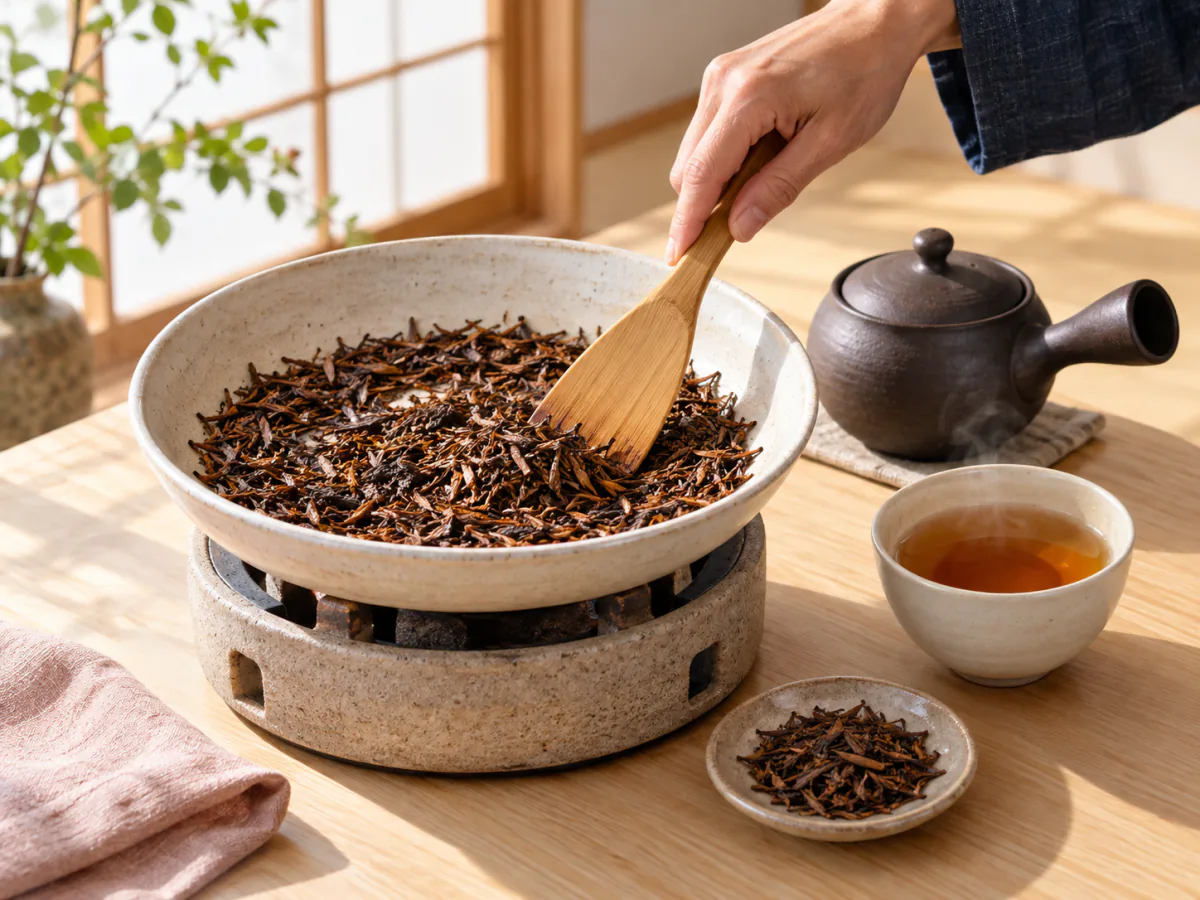
Tea holds a special place in Japanese culture. Hojicha stands out among green teas because the leaves are roasted, giving the infusion its brown colour and toasted aroma.
Roasting and the choice of leaf can change caffeine, catechin and theanine levels, but “low caffeine” is not the same as “no caffeine”. The cup’s composition also depends on the product and preparation, so people who are sensitive to caffeine should check the label and their own response.
Japanese craftsmanship 🇯🇵
Hojicha is a roasted green tea, commonly made from sencha or bancha. The roasting process gives it a mellow, toasted profile with notes that may recall hazelnut, caramel or wood. Products vary in their leaf material and roast.
Roasting can reduce some catechins, theanine and caffeine compared with the unroasted tea used as a reference, but the result is not a caffeine-free drink. The Japanese Ministry of Agriculture, Forestry and Fisheries lists a reference value of 20 mg of caffeine per 100 mL for brewed hojicha under a stated preparation method; the amount in a real cup changes with the leaves, dose, water and steeping time.
A comforting and approachable taste
Hojicha’s roasted aroma and lower bitterness make it approachable, including after a meal. It contains tea polyphenols, but the presence of polyphenols should not be turned into a promise of disease prevention, improved digestion or guaranteed relaxation. The same caution applies to L-theanine and other tea constituents.
Because caffeine remains present, evening use is a matter of personal sensitivity and serving size. Anyone who needs to limit caffeine should treat hojicha as tea, not as a caffeine-free substitute.
What the 2024 study actually tested
The 2024 Scientific Reports study compared water, green tea and roasted green tea in 20 healthy men aged 18–30 performing mental tasks. In the roasted-tea condition, some task-performance measures improved versus hot water, and participants reported refreshment or less fatigue. The study did not establish a treatment for stress or fatigue, and its authors note the small, narrow sample, the order of the conditions and the need for further research.
The researchers measured tea components and discussed pyrazines as a possible contributor to aroma-related responses. That is a hypothesis, not proof that pyrazines “stimulate brain waves” or that hojicha guarantees relaxation. The study did not justify saying that hojicha can be consumed at any time by every caffeine-sensitive person.
Keys to a successful brew
Hojicha is simple to prepare as loose-leaf tea or as a latte.
How do you prepare Hojicha tea?
- Heat water to approximately 90°C.
- Add 2 to 3 grams of leaves to a teapot or infuser.
- Steep for between 30 seconds and 3 minutes, depending on the desired strength.
- Strain and serve immediately.
These are practical starting points rather than a universal formula. A darker roast, a powder and a latte will extract and deliver constituents differently.
Hojicha Latte: a modern and creative twist
Hojicha powder can be mixed with hot plant-based or dairy milk for a creamy drink. The flavour is a culinary feature; it does not remove the caffeine or turn the drink into a therapeutic preparation.
Hojicha in our cups... and on our plates 🍽️
Hojicha powder is used in desserts such as ice cream, cakes, biscuits, puddings and flans. Its toasted profile works with sweet flavours such as vanilla and honey, as well as savoury ingredients such as black sesame and soy.
Where can you find Hojicha? 🛍️
You can look for hojicha at speciality Asian grocers, tea shops and online retailers. Check the product description and preparation guidance if Japanese provenance or caffeine matters to you.
Sources
Hojicha is a roasted Japanese green tea with a distinctive toasted aroma and, often, less caffeine than some unroasted teas. It is still tea, not a caffeine-free or medically proven wellness drink. The 2024 study offers an interesting small experimental signal about task performance and fatigue, with clear limits on generalisation. Enjoy the flavour, prepare it to taste and keep caffeine sensitivity in mind.