The Power of Alcohol-Free
A month without alcohol = one kilo lost?

By Anthony
To begin
The idea that a single month without alcohol could make a significant difference to your weight might seem hard to believe. Yet, many people who participate in Dry January (sober January) report impressive results regarding their health and physique. So, why and how can giving up alcohol actually help you lose weight?
How much do your alcoholic drinks weigh?
Alcohol is a major source of "empty" calories, meaning it provides energy without any significant nutritional benefit.
Unlike foods rich in fibre, vitamins, or protein, the calories in alcohol do not directly benefit the body.
- 1 gram of pure alcohol provides 7.1 kcal —almost as much as fat (9 kcal per gram) and significantly more than carbohydrates or protein (4 kcal per gram).
- Alcoholic beverages often contain added sugar, which further increases their calorie content.
Here is an average calorie estimate for common alcoholic beverages:
Calories per standard serving
- Red wine (15 cl): ~125 kcal
- White wine (15 cl): ~120 kcal
- Rosé wine (15 cl): ~115 kcal
- Sparkling wine (15 cl): ~110 kcal
- Pale beer (15 cl): ~60 kcal
- Dark beer (15 cl): ~75 kcal
- Standard spirits (50 ml, 40% alcohol): ~115 kcal (vodka, rum, whisky, gin)
- Cocktails: ~250 kcal (e.g., Margarita, Mojito)
For an equal volume, beer is therefore lower in calories than wine, mainly because it contains less alcohol. However, a standard serving of beer is generally larger (25 cl for a bottle or a glass at a bar), meaning that its total calorie count often exceeds that of wine.
Important note: Sweetened or flavoured spirits (infused rums, liqueurs, etc.) often contain added sugars, which can raise their calorie count to 150 kcal or more per 50 ml.
A drink or a snack?
When consuming alcohol, we often forget that these drinks are real calorie bombs.
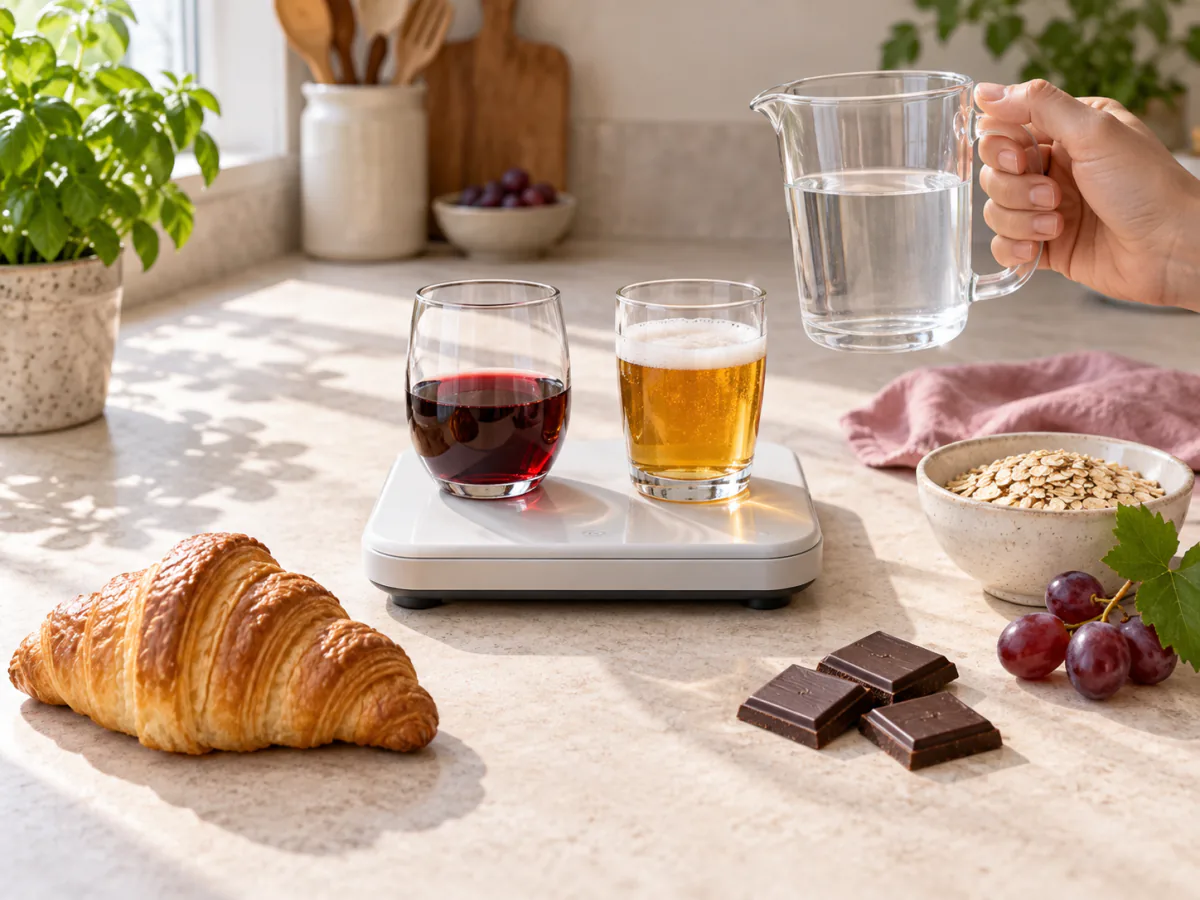
Here is the caloric equivalent of alcoholic drinks compared to common foods. You might be surprised to see what these "liquid" calories amount to on your plate!
Scroll the table to read all columns.
| Drink or food | Calories per serving | Food calorie equivalent |
|---|---|---|
| Red wine (15 cl) | ~125 kcal | 1 chocolate pastry (pain au chocolat) |
| Lager beer (25 cl) | ~150 kcal | 1 chocolate bar (e.g., Mars) |
| Cocktail (mojito, 20 cl) | ~200–250 kcal | 1 butter croissant |
| Vodka or rum (50 ml) | ~115 kcal | 2 shortbread cookies |
| Dark beer (25 cl) | ~180 kcal | 1 slice of apple pie |
| Glass of champagne (12 cl) | ~90 kcal | 1 sweetened fruit yoghurt |
Your favourite mojito could easily replace your morning croissant when it comes to the scale... but without the satiety or the nutrients!
Each alcoholic drink can account for a significant portion of your daily calorie intake. For example:
- A classic cocktail like a mojito (250 kcal) is equivalent to a croissant in terms of calories—but without the nutrients or the feeling of fullness!
- A lager (150 kcal) is comparable to a chocolate bar —the kind you might have for dessert.
These comparisons make it easier to visualize why cutting back on alcohol can have a significant impact on weight management.
How does alcohol affect your metabolism?
Beyond just calories, alcohol affects your body in subtle yet effective ways that promote weight gain:
- It blocks fat burning: the liver prioritises metabolising alcohol over fat; consequently, fat is stored rather than burned.
- It stimulates appetite: alcohol acts on the brain’s reward system, enhancing the palatability (taste appeal) of food and encouraging overeating. This effect is particularly pronounced when alcohol is consumed before a meal (the "appetizer effect"). Consuming alcohol before a meal significantly increases the amount of food eaten.
- It adds calories without providing satiety: unlike solid foods, alcoholic beverages do not induce a feeling of fullness proportional to their caloric content, leading to an overall energy surplus due to "added calories."
Alcohol should therefore be considered an orexigenic substance (appetite-stimulating) due to its combined effect on the hunger-satiety regulation system and the reward system.
A month without alcohol: what impact on your weight?
Let’s look at a concrete example: a person who consumes two glasses of red wine a day.
- A glass of red wine (15 cl) contains approximately 125 kcal.
- Consuming two glasses a day therefore amounts to 250 kcal daily.
- Over a week: 1,750 kcal saved.
- Over a month (30 days): 7,500 kcal saved.
1 kg of fat is equivalent to approximately 7,700 kcal. Giving up two daily glasses of wine could therefore lead to a weight loss of about 1 kg in a month, provided there is no compensatory intake from other sources.
Of course, results vary from person to person (impacts depend on age, gender, physical activity, and individual metabolism), but this simple change can make a significant difference.
Key distinctions based on consumption patterns
Studies identify several consumer profiles:
- Moderate consumption (1–2 drinks per week): little to no direct impact on weight.
- High or regular consumption: promotes fat accumulation, particularly in the abdominal area.
- Beer consumption: more strongly associated with weight gain due to its carbohydrate content.
Good to know:
- Red wine: although high in calories, it contains resveratrol, an antioxidant that may slightly limit fat accumulation.
- Beer: rich in carbohydrates derived from malt and often consumed in large quantities, beer contributes to the notorious "beer belly."
- Straight spirits: lower in calories per glass, but become problematic when mixed with sugary sodas or syrups.
- Cocktails: true calorie bombs; combining alcohol and sugar magnifies their impact on weight.
3 key takeaways:
- Alcohol is a significant source of energy: even in small amounts, it can account for a substantial portion of total calorie intake.
- It affects metabolism and appetite by blocking fat burning, thereby increasing food intake.
- Cutting back on alcohol has rapid effects: a month without alcohol can lead to measurable weight loss and overall health improvements.
Alcohol plays a major role in many traditions and social gatherings, yet its impact on weight and metabolism is often underestimated. Whether through "empty" calories, its effect on appetite, or its influence on fat storage, it can be a real obstacle to achieving your health and fitness goals.
Taking part in a challenge like Dry January—or simply cutting down on consumption—can offer far more than just weight loss. By taking this break, you could enjoy better sleep, renewed energy, and a fresh perspective on your drinking habits. So, why not give it a try? Every drink you skip is an opportunity for your body to regenerate.