The Power of Alcohol-Free
Electrolytes and exercise: when a sports drink helps

By Anthony
To begin
Sweat carries water and electrolytes, but not every workout requires a sports drink. The right choice depends on duration, intensity, heat, sweat loss and the next session. For a short, ordinary workout, water and a normal meal are usually enough. Longer or hotter efforts create a different problem: replacing fluid, sodium and sometimes carbohydrate at the same time.
What electrolytes do
Sodium and other electrolytes help maintain fluid distribution, nerve signalling and muscle contraction. Sweating can remove sodium, but the amount varies greatly between people and conditions. Cramps are not a simple electrolyte-deficiency test, so a drink cannot promise to prevent them.
When a sports drink earns its place
The American College of Sports Medicine reports little evidence of a performance difference between water and a carbohydrate-electrolyte drink during exercise lasting less than one hour. For intense exercise lasting longer than an hour, it describes a role for carbohydrate and sodium in a suitable fluid plan.
That is the useful dividing line. A long run in heat, a tournament with little recovery time or several hours of sweaty work may justify a sports drink. A short gym session or a walk usually does not require one. After exercise, the combination of ordinary food and fluid can replace energy and electrolytes without a branded recovery promise.
“Isotonic” does not mean sugar-free
Sports drinks are formulated around a balance of fluid, carbohydrate and electrolytes. The Australian Institute of Sport describes a composition range used to support rapid delivery of fluid and fuel: about 4–8% carbohydrate and 23–69 mg sodium per 100 ml; commercial products vary. That distinction is why a sugar-free product cannot automatically be described as equivalent to a conventional isotonic drink.
A low-sugar or sugar-free drink may supply sodium and fluid, which can be useful when carbohydrate is not needed. It will not restore muscle glycogen in the same way as a drink containing carbohydrate. Read the label; do not rely on the word “isotonic” alone.
Four sensible options
- Water: the default for daily hydration and shorter sessions.
- Mineral water: useful fluid, but mineral and sodium content varies; check the label.
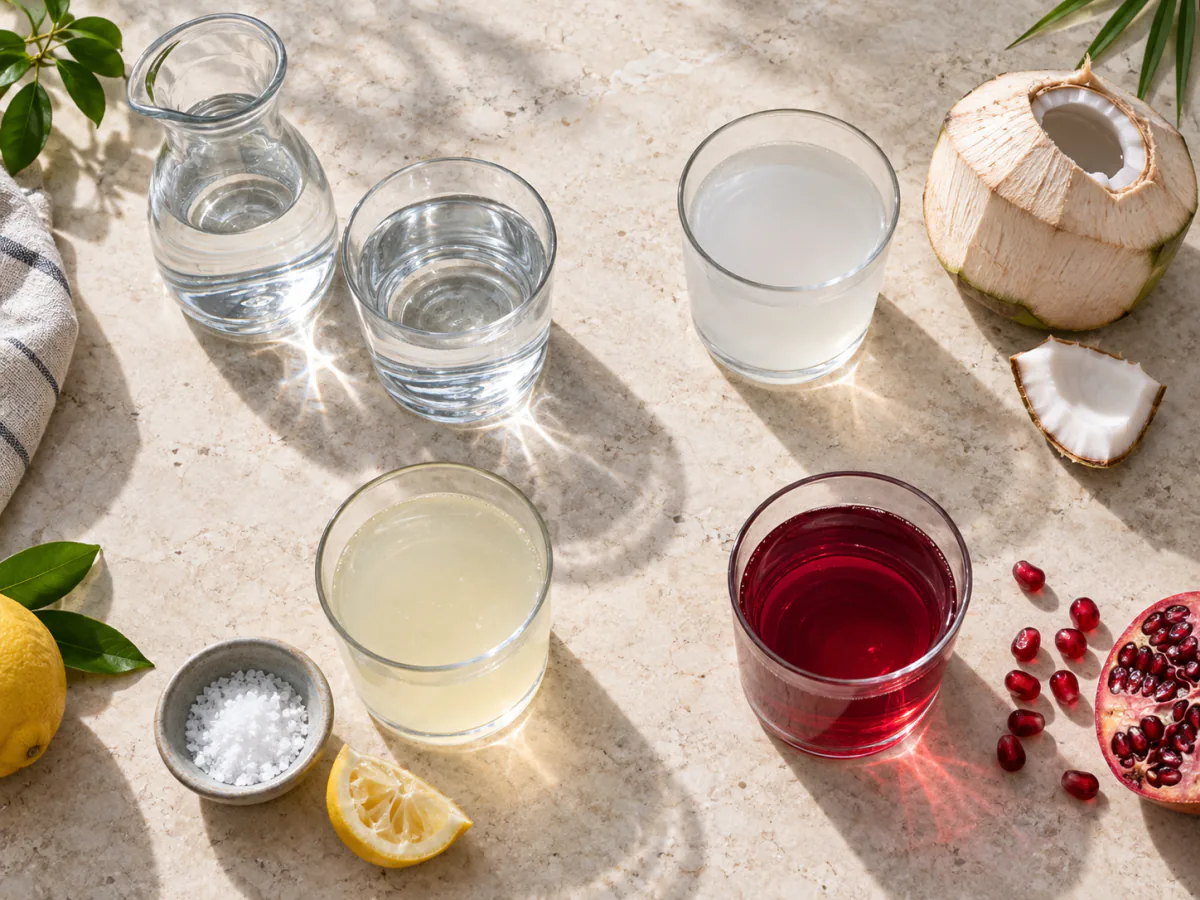
- Coconut water: a palatable source of fluid and potassium, but not a universal replacement for the sodium lost in heavy sweat.
- A sports drink or diluted juice: these can supply carbohydrate and fluid during longer, demanding efforts. Diluted juice may not provide enough sodium and is not automatically equivalent to a sports drink. Sugar serves as fuel here, not a health free pass. The fruit-juice collection and functional-drink collection can provide recipe ideas, not a personalised protocol.
Keep free sugars in context. WHO recommends less than 10% of total energy intake from free sugars, with a conditional suggestion below 5%. A sports drink used for a long event is a different decision from drinking sweetened beverages all day.
After the finish line
Rehydrate gradually, eat a normal meal and include salty food when the session produced substantial sweat. Do not force large volumes of water or other fluids. If you have kidney, heart or endocrine disease, or a prescribed sodium or fluid restriction, use clinical advice rather than a sports-drink table.
Sources
Electrolytes are tools for a specific demand, not a daily wellness requirement. Water is usually enough for shorter exercise; long, intense or hot sessions may call for sodium and carbohydrate matched to the work.
A sugar-free drink can be useful, but it is not automatically isotonic and it cannot refuel glycogen. Read the label, match the drink to the session, and let food do the everyday recovery work.