The Power of Alcohol-Free
EU dealcoholised wine: what “alcohol-free” and “0.0%” will mean in 2027

By Anthony
To begin
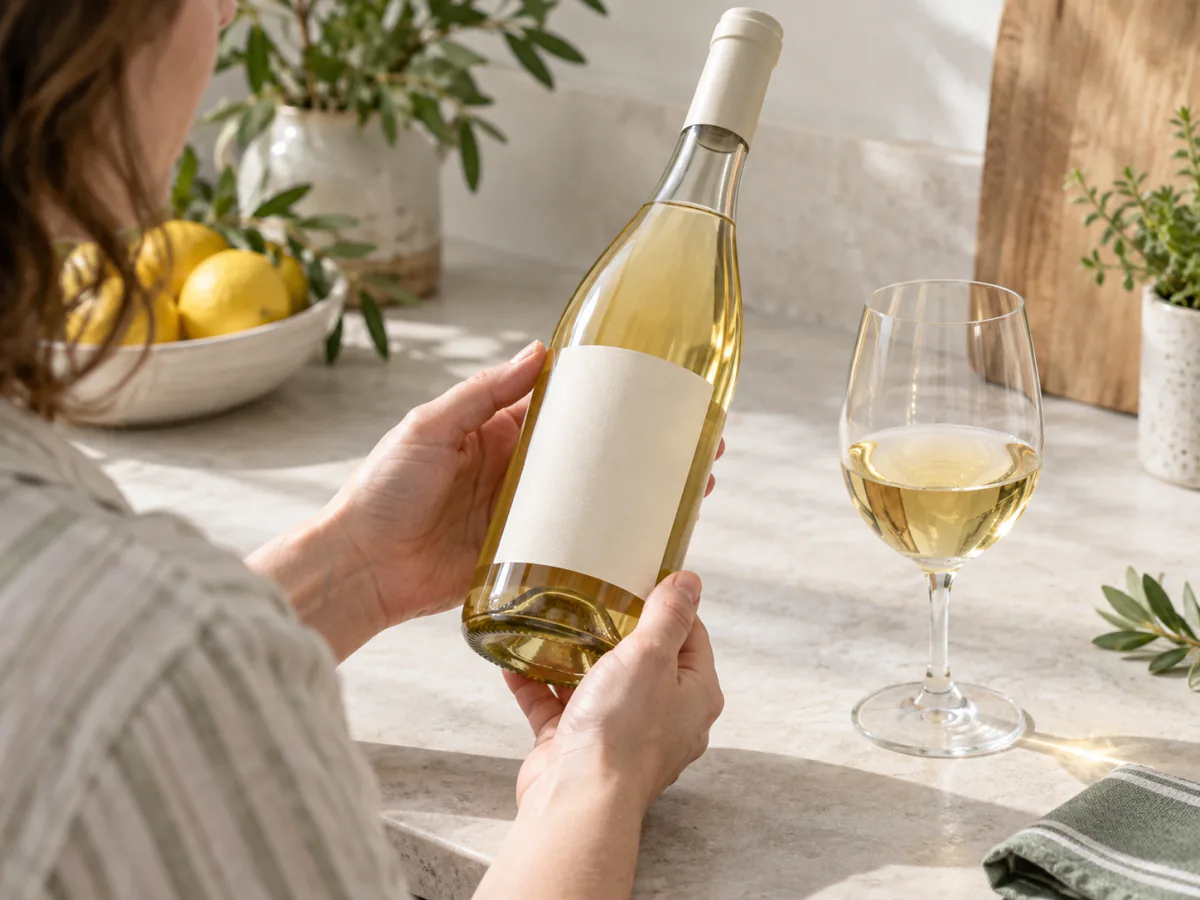
Two bottles of dealcoholised wine can both say “alcohol-free”, while only one says “0.0%”.
What the label might say in October 2026
Dealcoholisation is a treatment applied to wine. For a product in the “wine” category, the current legal name is "dealcoholised wine" if its alcohol content does not exceed 0.5% ABV. The DGCCRF fact sheet published in July 2025 specifies that the term "alcohol-free" may accompany this designation up to that same threshold. "Alcohol-free" therefore does not necessarily mean a total absence of alcohol.
The same fact sheet describes the optional "0.0% vol." claim under the current regulatory framework. When used on a dealcoholised wine, this claim supplements the legal designation. It requires alcohol to be undetectable in testing, which the DGCCRF describes as an alcohol content of less than 0.1% vol. This fact sheet, which predates the reform, should not be interpreted as already outlining the 0.05% threshold applicable from September 2027. A label bearing "0.0%" does not, in itself, establish that the measured alcohol content is literally zero.
There is also a distinction between "dealcoholised wine" and a "beverage obtained from the dealcoholisation of wine." The DGCCRF applies this latter designation to beverages that do not meet the criteria required to be sold as dealcoholised wine. The word wine alone does not tell you which it is: check the product’s full name.
A separate “0.0%” threshold from 19 September 2027
Regulation (EU) 2026/471, which entered into force on 18 March 2026, amends Article 119 of the wine regulation. For the relevant grapevine product categories that have undergone dealcoholisation, the designation must be supplemented by "alcohol-free" if the alcohol content does not exceed 0.5% vol. This indication must be accompanied by "0.0%" if the content does not exceed 0.05% vol. This second threshold is stricter than the one specified for the optional indication in the 2025 DGCCRF factsheet.
Scroll the table to read all columns.
| Alcohol content of the dealcoholised wine product | Wording under the new rules | Key takeaway |
|---|---|---|
| Max. 0.05% vol. | "alcohol-free" and "0.0%" | The "0.0%" refers to a measurable threshold, not absolute zero. |
| > 0.05% and max. 0.5% vol. | "alcohol-free", without "0.0%" under this rule | The two statements are not interchangeable. |
| > 0.5% vol. | "reduced alcohol", if the condition specified below the table is met | An alcohol content above 0.5% is not sufficient on its own to justify this statement. |
For the last row, the regulation also requires an alcohol content at least 30% lower than the minimum set for the category prior to dealcoholisation. These thresholds apply to the dealcoholised wine products covered by the text, not to all beverages sold in the alcohol-free aisle. The corrigendum published on 22 May 2026 specifies that the postponement to 19 September 2027 applies to Article 1, point 10(a), which contains the new labelling terms.
Bottles labelled before 19 September 2027 may stay on sale
The regulation provides for a transition period: dealcoholised wine products labelled in accordance with the old provisions before 19 September 2027 may continue to be marketed until stocks are exhausted. The new rules taking effect do not mean every bottle on the shelf will change its label that day.
After this date, do not automatically assume that a bottle with the old labelling is non-compliant; its labelling may fall under this transition period. If the precise alcohol content is crucial to you, the mere presence of the term "alcohol-free" (sans alcool) does not necessarily mean the content is "0.0%." Check the product name and the stated alcohol content, then ask the seller or manufacturer for clarification if the label does not provide the information you need.
Do not apply the wine threshold to beer
The European 0.05% threshold associated with the "0.0%" label in this wine reform does not define "alcohol-free" beer. In France, the decree governing beer allows this designation for products with an alcohol content of up to 1.2% ABV. A beer labelled this way may therefore have a higher alcohol content than a dealcoholised wine labelled "alcohol-free."
For any other type of drink, check its own legal name and alcohol content rather than carrying these limits across.