The Power of Alcohol-Free
GABA in non-alcoholic drinks: what the evidence says

By Anthony
To begin
GABA, or gamma-aminobutyric acid, is the main inhibitory neurotransmitter in the mammalian central nervous system. That fact does not mean that drinking GABA produces the same effect as increasing GABA signalling in the brain.
Some teas and beverages contain added or naturally occurring GABA, and some products market it as calming or sleep-supporting. Human studies have investigated stress and sleep, but doses, products, outcomes and study quality vary. This article separates the established biology of GABA from the much less certain claims made about oral drinks.
What is GABA?
GABA, or gamma-aminobutyric acid, is an inhibitory neurotransmitter used by neurons in the central nervous system. GABA signalling helps regulate neuronal excitability through several receptor types, including GABA-A and GABA-B receptors. That description applies to neurotransmission; it does not establish that GABA added to a beverage reaches the brain or reproduces a medical treatment.
What oral GABA might—and might not—do
Stress and anxiety
A 2020 systematic review of human studies found low-to-moderate evidence for stress-related effects and low evidence for sleep benefits. The studies used different forms and doses of GABA, many were small, and the review noted substantial methodological variation. A reduction in a short-term stress measure is not proof that an ordinary beverage treats anxiety or depression.
Sleep
One small randomised, single-blind, placebo-controlled crossover study reported shorter sleep latency and more total non-REM sleep after oral GABA. The study was exploratory, and its findings do not establish the right dose, long-term safety or a benefit for people with insomnia. Oral GABA is not a substitute for assessment or treatment of a sleep disorder.
Mood, concentration and “brain calming”
Claims about mood stabilisation, depression, concentration, focus or the removal of brain fog are not established by the evidence reviewed here. GABA’s ability to cross the blood–brain barrier in meaningful amounts after ordinary oral intake remains unresolved; a safety review describes the available evidence as suggesting very low passage, while other pathways may also contribute to observed effects.
GABA in teas and non-alcoholic drinks
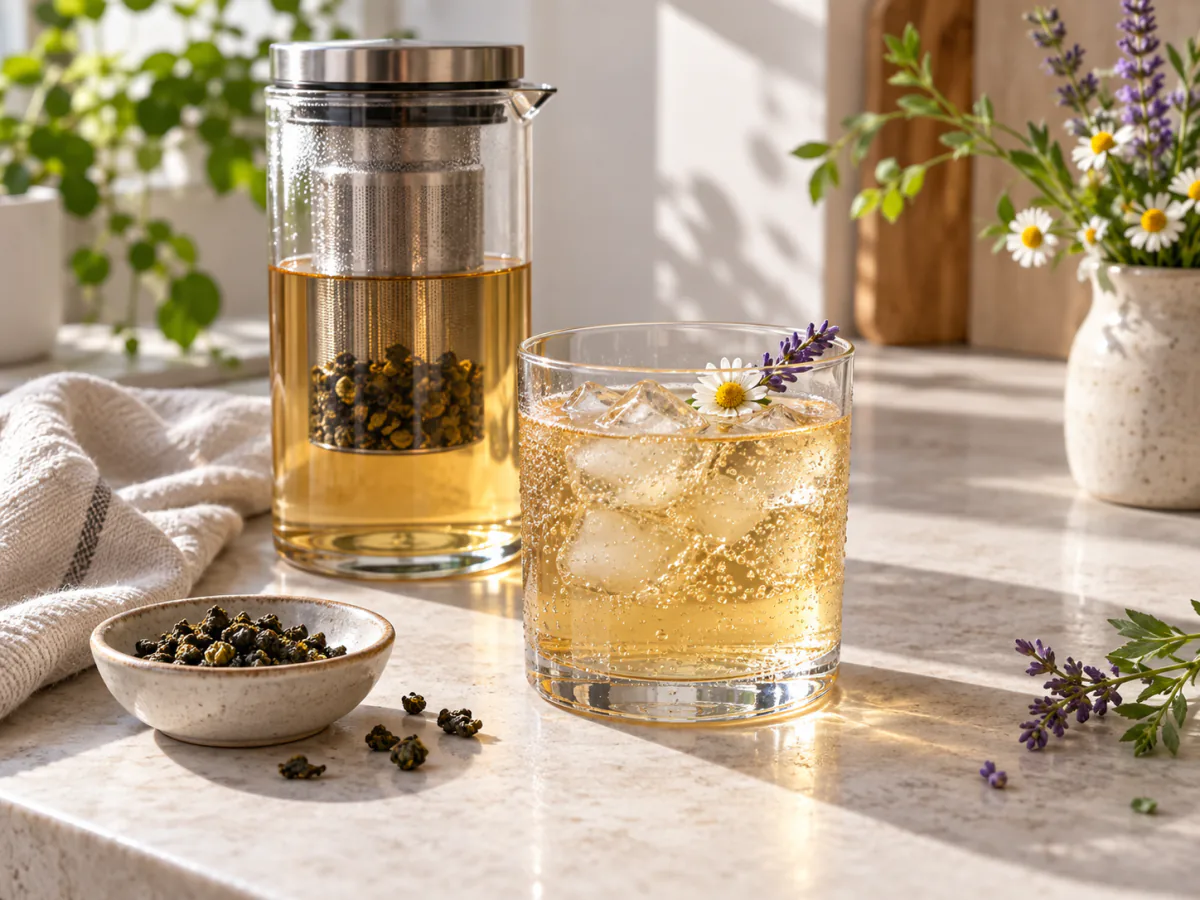
Tea or a beverage may contain GABA, caffeine, theanine, herbs, sweeteners and other ingredients at the same time. A 2019 study of 30 young participants compared GABA-fortified oolong tea with regular tea and measured heart-rate variability and self-reported stress before and after one cup. Both teas produced changes, and the study design cannot isolate GABA from the tea, expectancy or the short follow-up.
Commercial drinks may therefore describe an ingredient and a proposed experience, but a product claim is not a clinical finding. Read the composition and GABA amount, along with other ingredients such as caffeine. Interactions with any medicines the person takes depend on the individual and should be discussed with a healthcare professional.
What the evidence supports
The evidence supports continued research into oral GABA and GABA-enriched foods. It does not support describing every GABA drink as a natural calming agent, a sleep treatment, an antidepressant or a way to improve concentration. The amount, preparation, other ingredients and person’s health all matter, and people taking medicines or managing a condition should ask a healthcare professional before using a concentrated product.
Sources
- United States Pharmacopeia Safety Review of Gamma-Aminobutyric Acid (GABA)
- Neurotransmitters as food supplements: the effects of GABA on brain and behavior
- Effects of Oral Gamma-Aminobutyric Acid (GABA) Administration on Stress and Sleep in Humans: A Systematic Review
- Effect of GABA administration on sleep and its absorption in humans
- Effect of GABA-Fortified Oolong Tea on Reducing Stress in a University Student Cohort
GABA is a real inhibitory neurotransmitter, but the effects of GABA consumed in a drink remain uncertain. Small human studies and a systematic review suggest possible short-term effects on stress or sleep, while the mechanism, dose and clinical relevance are not settled. GABA beverages should be described as products of emerging interest, not as validated calming or sleep treatments.