The Power of Alcohol-Free
The paradoxical cocktail: alcohol may make you sleepy, then disrupt the night

By Anthony
To begin
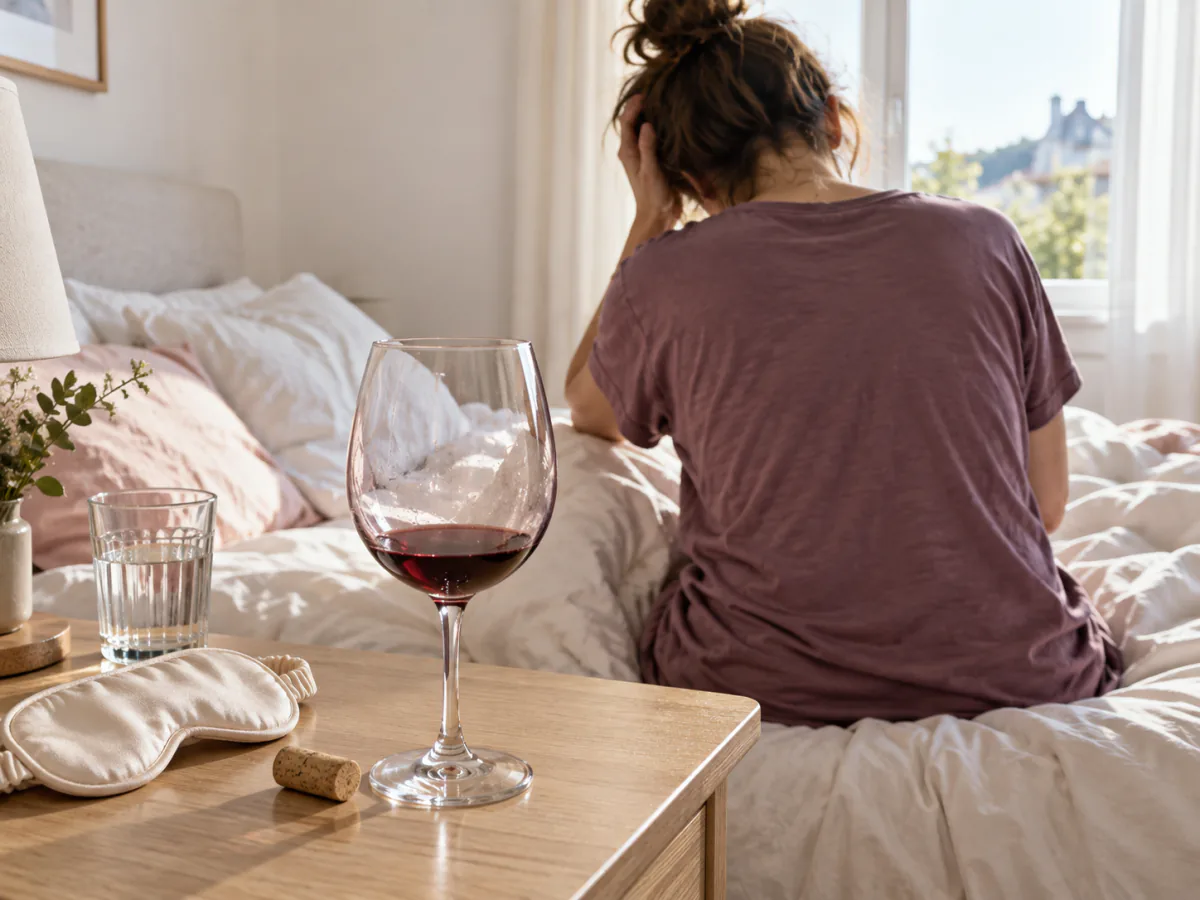
A drink can feel like a shortcut to sleep: the sedative effect may make you nod off sooner. But alcohol changes sleep architecture and commonly makes the later part of the night lighter and more fragmented. A systematic review and meta-analysis published in 2025 found dose-related effects on REM sleep, while uncertainty remains about some measures of total sleep and wakefulness.
That distinction matters. “I fell asleep quickly” is an observation about sleep onset, not proof that alcohol improved recovery, memory or next-day alertness. Here is what the evidence supports, what two often-cited papers do not show, and which low-risk habits can help without turning a drink into a treatment.
Why alcohol can feel helpful at first
Alcohol has sedative effects, so some people fall asleep faster after drinking. A review in Sleep Medicine Reviews found a recurring pattern: alcohol can reduce sleep latency and consolidate the first part of the night, followed by more disruption later. The 2025 systematic review and meta-analysis included 27 studies; lower doses (up to about 0.5 g/kg) tended to reduce or delay REM sleep, while higher doses (at least about 0.85 g/kg) could shorten sleep onset but were more likely to worsen later-night REM sleep.
Those dose categories are study-level averages, not a safe recipe. Body size, sex, food, tolerance, timing, medicines and sleep disorders all affect the response. The older review of alcohol and sleep similarly describes faster sleep onset, first-half consolidation and second-half disruption, with dose-related REM changes.
A shorter sleep latency is not better sleep
What changes during the night?
Sleep normally cycles through non-REM and REM stages. Alcohol can delay or reduce early REM, then produce rebound or more fragmented REM later as its concentration falls. Snoring and sleep-disordered breathing may also be made worse in some people. That is why a person can remember falling asleep quickly and still wake unrefreshed.
The evidence is not a universal equation: the 2025 review reports stronger evidence for REM timing than for every measure of total sleep or wakefulness. It also cannot tell an individual exactly how many hours or awakenings a particular drink will cause.
Two citations that need careful reading
A regular sleep schedule is reasonable sleep-hygiene advice, but it is not evidence that alcohol improves sleep or that a particular bedtime fixes insomnia. A clinical audit of alcohol as a trigger for slow-wave sleep disorders provides condition-specific context; it does not prove that alcohol works through one universal melatonin mechanism.
Melatonin physiology is part of sleep biology, but the available evidence does not justify promising that alcohol will “boost” or “reset” melatonin for everyone. Nor does a sedative effect establish deeper, more restorative sleep.
What may help without using alcohol as a sleep aid
Simple sleep-hygiene steps
Evidence-based sleep advice is deliberately unglamorous:
- keep a regular wake time and allow enough time for sleep;
- seek daylight and physical activity during the day;
- make the bedroom cool, dark and quiet;
- wind down without bright screens or demanding work;
- avoid alcohol close to bedtime, especially if it worsens snoring or night waking;
- limit caffeine late in the day.
The NHS sleep guidance notes that alcohol may make you sleepy initially but can lead to poor sleep later, and suggests avoiding alcohol and caffeine in the hours before bed. The exact interval is a practical starting point, not a guarantee for every person.
If insomnia persists for weeks, causes daytime impairment or occurs with loud snoring, pauses in breathing, restless legs, depression or medication changes, a GP or sleep professional can help. Cognitive behavioural therapy for insomnia is a clinical treatment; a bedtime drink is not.
What about alcohol-free or herbal alternatives?
Replacing an alcoholic drink with water, caffeine-free herbal tea or a carefully chosen alcohol-free option may help someone keep a familiar evening ritual. The benefit may come from the routine and the reduction in alcohol, not from a proven “deep sleep” ingredient. Herbal products and supplements can interact with medicines and are not automatically safe or effective; the NHS Inform sleep self-help guide does not present them as a clinically established treatment.
An alcohol-free cocktail can be part of a wind-down routine, but it cannot compensate for chronic sleep deprivation. Explore alcohol-free options and the wider site’s health context as practical alternatives, while keeping the claim modest.
A safer way to think about the paradox
Alcohol may make sleep onset feel easier while reducing sleep quality later. More alcohol is not a solution to the resulting fatigue, and mixing alcohol with sedatives or sleep medicines can be dangerous. If you drink heavily every day, seek medical advice before stopping suddenly because withdrawal can be serious.
The useful experiment is to compare nights without alcohol, keep the wake time steady and note sleep and next-day function. One good night does not prove a treatment, and one poor night does not diagnose a disorder.
Sources
Alcohol can make you sleepy without giving you better sleep. Research supports faster sleep onset for some doses, followed by disrupted later-night sleep and dose-related changes in REM; it does not support alcohol as a treatment or a universal melatonin hack.
A regular schedule, daylight, activity, a cool dark room and a non-alcoholic evening ritual are safer starting points. If poor sleep persists or breathing symptoms appear, ask a clinician for an assessment rather than increasing the drink.