Zero Pulse
Bubble Tea: the trendy drink that speaks to our contradictions

By Anthony
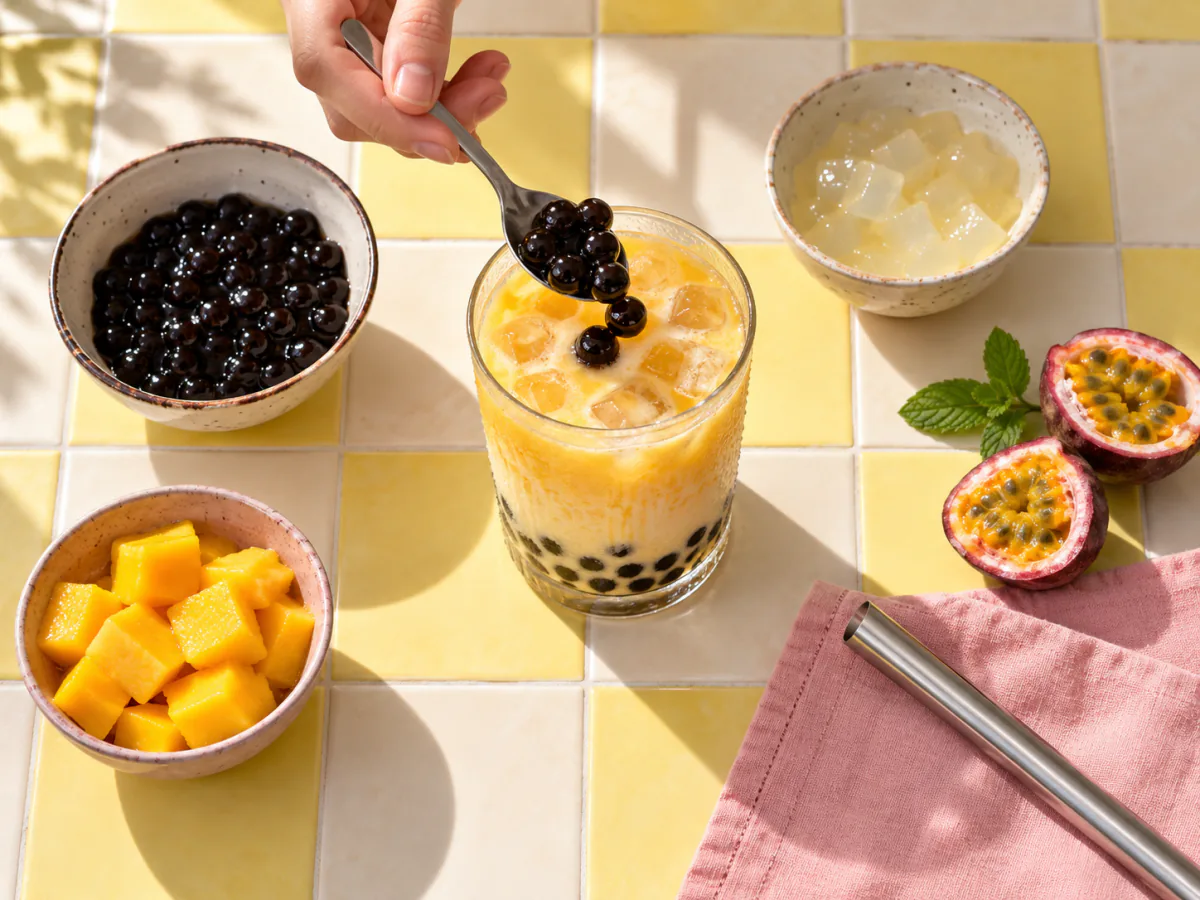
To begin
It is a drink that leaves no one indifferent: at once a nostalgic treat and a symbol of culinary creativity, Bubble Tea has crossed continents to establish itself as a global pop-culture icon. Its suspended black pearls, oversized straw, and endless variations make it far more than just a simple milk tea: it is a style statement, a canvas for customisation, and an invitation to sensory play. Yet, behind the trend lies a more nuanced reality involving public health issues, environmental concerns, and a quest for meaning. Is Bubble Tea a mirror of our times?
Disputed origins: Taiwan at the heart of the legend
Two cities, one "pearl" legend
In Taiwan, the story of Bubble Tea is told like an origin myth. Two iconic establishments lay claim to the invention of this cult drink: in Taichung, the Chun Shui Tang teahouse asserts that in 1987, its marketing manager—out of curiosity—poured tapioca pearls into a shaken iced tea; the unexpected, playful result was an instant hit. In Tainan, Hanlin Tea Room puts forward an earlier version from 1986, using white pearls inspired by traditional tangyuan. The history is hazy, but one thing is certain: Bubble Tea was born of Taiwanese boldness, somewhere between tradition and experimentation.
From foam to substance
Originally, the term "bubble tea" did not refer to the famous tapioca pearls, but rather to the fine foam created when the tea was shaken vigorously in a shaker. This light, airy texture was a sign of a freshly prepared, almost artisanal tea. The addition of pearls—whether black or translucent—transformed the drink into a tactile experience. You no longer simply drink tea: you bite, you slurp, you chew. The extra-wide straw became the symbol of this hybrid drink, which is as much a visual experience as a sensory one.
The Bubble Tea wave goes global
After conquering Northeast Asia in the 1990s, Bubble Tea took root in Asian communities across North America before winning over a much broader audience. Driven by the Taiwanese diaspora, the first speciality shops sprang up in Los Angeles and Vancouver, followed by London, Paris, and Berlin. In Europe, the craze has been spectacular since the 2010s, fuelled by Generation Z, social media, and an obsession with customisation. In 2024, the global market exceeded USD 2.8 billion and could approach USD 10 billion by 2035. Bubble Tea is no longer a niche phenomenon: it is an industry.
The art of custom Bubble Tea
Craft your drink like a chef's dish
This may well be one of the secrets to its success: every Bubble Tea is unique. Customers choose their base —black, green, or oolong tea, fruit infusions, or matcha—their milk (whole, skim, plant-based, or even salted cheese foam), their sugar level (from 0% to 120%), the temperature, and, above all, the toppings. Classic tapioca pearls, fruit boba that burst in the mouth, herbal jelly, flan, fruit pieces... The experience is interactive, almost playful. This total freedom turns ordering into a creative act, and each Bubble Tea becomes a reflection of the person drinking it.
A sugar overload: the downside of the pearl-filled treat
Behind the harmless image of a colourful milk tea sometimes lurks a veritable sugar bomb. A standard 500 ml serving with pearls and a 100% sugar level can contain up to 45 grams of sugar —equivalent to 18 teaspoons —far exceeding the WHO’s recommended daily intake of 25 g for adults.
Some chains now offer versions with 50% or 30% sugar, or even sugar-free options, but this practice is not yet widespread. Amidst efforts to combat obesity, diabetes, and metabolic diseases, the issue of sugar has become central to the future of Bubble Tea.
Bubble Tea: A Star of Feeds and Stories
Bubble tea has become an object of visual desire. Its pastel colours, layered composition, suspended pearls, and oversized straw make for an irresistible image on Instagram and TikTok. The #bubbletea hashtag has racked up millions of posts, stories, and tutorials, propelling the drink to the status of a lifestyle accessory. Every sip becomes a moment to capture and share.
This participatory aesthetic has played a major role in the globalization of the phenomenon, aligning it with the codes of pop culture and digital marketing.
Bubble Tea’s Gentle Evolution
A Recipe Adapting to New Health Expectations
Faced with rising nutritional concerns, many brands are rethinking their recipes. The focus is now on antioxidant-rich bases like green tea or matcha; sugar levels are being reduced; industrial milk powders are being dropped in favour of more easily digestible plant-based milks; and innovative toppings —such as aloe vera jelly, chia seeds, and fruit cubes—are partially replacing tapioca pearls. The enjoyment remains, but with better calorie control and a more balanced profile. Bubble tea is thus becoming a delicious alternative to other classic sugary drinks.
Bubble Tea makes its way to the bar—with or without alcohol
Bubble Tea has found a new stage behind the bar counter. With its varied textures and flavours, it is inspiring a generation of mixologists to boldly reinvent the classics. In its alcoholic version—dubbed "Boozy Boba"—it blends with vodka, gin, or floral liqueurs to create cocktails that are as visually striking as they are surprising. But the trend is just as strong in mocktails : citrus tea infusions, yuzu syrup, basil pearls, or plant-based foam. Whether festive or alcohol-free, Bubble Tea is becoming a mixology drink in its own right, ideal for modern, inclusive menus.
Bubble Tea’s eco-conscious awakening
Long criticised for its single-use plastic straws and non-recyclable packaging, Bubble Tea is entering a transition phase. Many brands are now adopting more sustainable alternatives: compostable straws made from tea fibre, bamboo, pine, or wheat; paper cups with natural linings; and plastic-free lids. This shift is largely driven by Gen Z, a demographic particularly attentive to brands' environmental commitments. A new demand is driving the sector to innovate by integrating eco-responsibility into the overall experience, without sacrificing aesthetics or practicality.
A booming industry
A global market bubbling over
What was merely a niche phenomenon in the 2000s has become a multi-billion-dollar industry. In 2024, the global bubble tea market is valued at USD 2.8 billion, with projections reaching USD 9.7 billion by 2035. Annual growth hovers between 8% and 10%, driven by customisation, the rise of ready-to-drink (RTD) formats, and expansion into major retail outlets. In Europe, Germany, the UK, and France are driving demand, fuelled by growing enthusiasm for fruity, low-sugar, and plant-based versions. Bubble tea has become a strategic category for beverage companies, sitting at the intersection of foodservice, snacking and indulgent wellness.
Key market segments
Three major trends stand out clearly in the market's growth. First, fruity versions (mango, passion fruit, strawberry, lychee, etc.) appeal due to their freshness and lightness, already accounting for 32% of the European market. Next, plant-based and reduced-sugar recipes are gaining ground; they cater to a more conscious consumer base that prioritises health without wanting to sacrifice enjoyment. Finally, bottled ready-to-drink (RTD) formats are establishing themselves on the shelves of major supermarkets and urban convenience stores. Practical and portable, they allow Bubble Tea to step out of the tea shop and into everyday life.
From tea shop to home
Beyond simply buying it on-site, Bubble Tea is increasingly viewed as an experience to recreate, share, and customise at home. DIY workshops, home kits, online tutorials: a whole world has sprung up around homemade preparation. The pleasure lies not just in the tasting, but also in the making, the process, and the sharing of the craft. This trend fosters a sense of community around the drink, where people exchange recipes, tips, and inspiration.
The risks beneath the foam
Hidden sugars, visible calories: a closer look at Bubble Tea
Behind its pastel colours and innocuous appearance, Bubble Tea can hide a significant calorie count. Tapioca pearls, composed almost entirely of starch, can contain over 300 kcal per serving. Add sweetened milk, flavoured syrup, and a high dose of sugar, and you quickly exceed 400 to 500 kcal per drink. On top of this, there are sometimes non-dairy creamers rich in trans fats or questionable artificial flavourings. In short: while bubble tea is an indulgent treat, it is best consumed mindfully, especially by younger people or regular consumers.
Good habits to adopt
To enjoy bubble tea without overdoing it, a few simple adjustments can make all the difference. Opt for a serving size of less than 350 ml, reduce the sugar to 30% or less, and choose plain tea without added milk to benefit from the antioxidants. Tapioca pearls can be partially replaced with fruit jelly, aloe vera, or konjac pearls, which cuts nearly 100 kcal from the drink. Finally, some people choose to make their bubble tea at home, allowing them to control the ingredients and adjust the drink to suit their tastes, diet, or mood.
Modern pleasure, shared responsibility
Bubble tea is neither a threat nor a cure-all. It reflects our times: a constant tug-of-war between the desire for instant gratification, the pursuit of health, and environmental awareness. Rather than leaving it to industrial excess, it deserves to be reclaimed, reformulated, and reimagined. Less sugar, greater ingredient transparency, more sustainable practices. By embracing these changes, we sacrifice nothing—on the contrary, we restore the full modern appeal of this popular drink.
Born from a spontaneous moment in a Taiwanese tea shop, Bubble Tea has become a global icon. Its success story is not merely about taste; it is the story of an expressive drink that embodies the trends, contradictions, and aspirations of its time. At a time when pleasure can no longer ignore health, and aesthetics must engage with ethics, Bubble Tea offers a fantastic laboratory for transition. It can be viewed as a sugary indulgence—provided it is transformed into a mindful, joyful, and creative drink. It is like a distillation of our times, to be enjoyed in big gulps... or small bubbles.