Zero Pulse
Dealcoholisation: the modern alchemy of today’s wine

By Anthony
To begin
Taking alcohol out of wine is both a technical process and a regulatory one. A drink made with grapes does not automatically qualify as wine, and a legal product name does not guarantee that the result tastes identical to the original.
The EU framework introduced in 2021 distinguishes dealcoholised and partially dealcoholised wines. Later changes affect organic production and, from September 2027, the wording on labels.
When a dealcoholised product can be called wine
The EU wine framework permits qualifying products that have undergone dealcoholisation to retain the wine-category name. The DGCCRF’s explanation of the rules distinguishes them from drinks made using practices outside the wine framework, such as adding water or external flavourings.
Under the labelling framework described in that 2025 guidance:
- Dealcoholised wine has an actual alcoholic strength of 0.5% ABV or less.
- Partially dealcoholised wine is above 0.5% ABV but below the minimum strength for its original product category. 8.5% is not a universal upper limit: the minimum varies with the category and, for still wines, the wine-growing zone.
The relevant term accompanies the category name, such as wine or sparkling wine. These are legal classifications, not a guarantee of a particular flavour or of complete transparency about every production choice.
Three authorised approaches, with sensory trade-offs
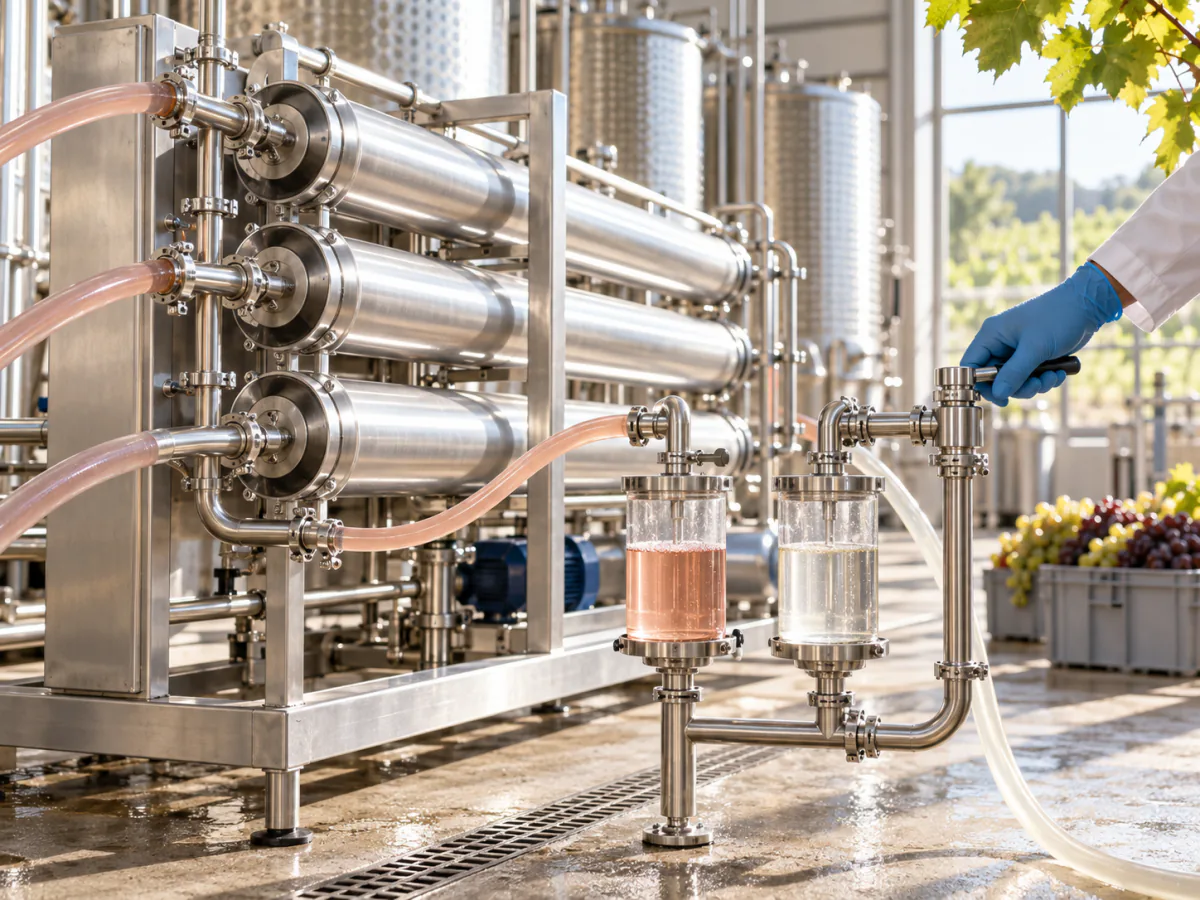
The permitted processes include partial vacuum evaporation, membrane techniques and distillation, used alone or together within the applicable production rules. They remove alcohol in different ways. Preserving aroma, texture and balance remains a technical challenge; none of the methods guarantees that delicate aromas will be entirely unchanged.
For the drinker, the useful test is the finished product. Alcohol content, sweetness, acidity and texture can differ between recipes. A bottle’s legal category describes its regulatory status; it cannot tell you whether you will like its taste.
What changes on labels in 2027
The 2025 French guidance permits the additional term sans alcool for qualifying wine at no more than 0.5% ABV and describes an optional 0.0% indication below 0.1% ABV. Those figures must be read in their dated French/EU context.
Regulation (EU) 2026/471, read with its May 2026 corrigendum, introduces new terms for the relevant dealcoholised grapevine products from 19 September 2027: alcohol-free at no more than 0.5% ABV, accompanied by 0.0% at no more than 0.05% ABV. Above 0.5% ABV, “reduced alcohol” also requires the product’s actual alcoholic strength to be at least 30% below the minimum for its category before dealcoholisation. Products labelled under the previous rules before that date can continue to be marketed until stocks are exhausted.
The separate guide to reading alcohol-free and 0.0% wine labels explains those thresholds in more detail. For the range itself, see dealcoholised wines. Neither the new 0.0% threshold nor the wine rules define alcohol-free beer in every country.
Organic certification: the older restriction has changed
A blanket statement that products containing more than 5% dealcoholised wine cannot be organic is outdated. The DGCCRF records that, since March 2025, qualifying wine dealcoholised using partial vacuum evaporation and/or distillation can be certified organic under the amended EU rules. The product still has to meet the other organic requirements. This does not mean every method or every dealcoholised drink is automatically eligible.
Wine, aromatised drinks and non-fermented alternatives
These products should not be treated as one category. A beverage made from grape ingredients, flavoured water or macerated botanicals does not qualify as wine merely because it uses the bottle shape or serving ritual. Aromatised wine products also have their own framework; describing every flavoured drink as legally incapable of using any wine-related designation is too broad.
The International Organisation of Vine and Wine contributes technical work in this field, while the applicable EU legislation determines the legal requirements. Check the product’s full name and declared alcohol content, rather than inferring its status from the word alcohol-free alone.
Dealcoholisation broadens the choice of wine-related drinks, but the process, legal category and alcohol content remain separate questions. The useful distinctions are specific: qualifying wine versus a different beverage, the rules in force now versus the 2027 labelling terms, and eligibility for organic certification versus an automatic guarantee. Taste still has to be judged in the glass, and a labelling rule is not a medical recommendation.