Zero Pulse
French Bloom, Heineken, Athletic... the champions of 0% sponsorship!

By Anthony
To begin
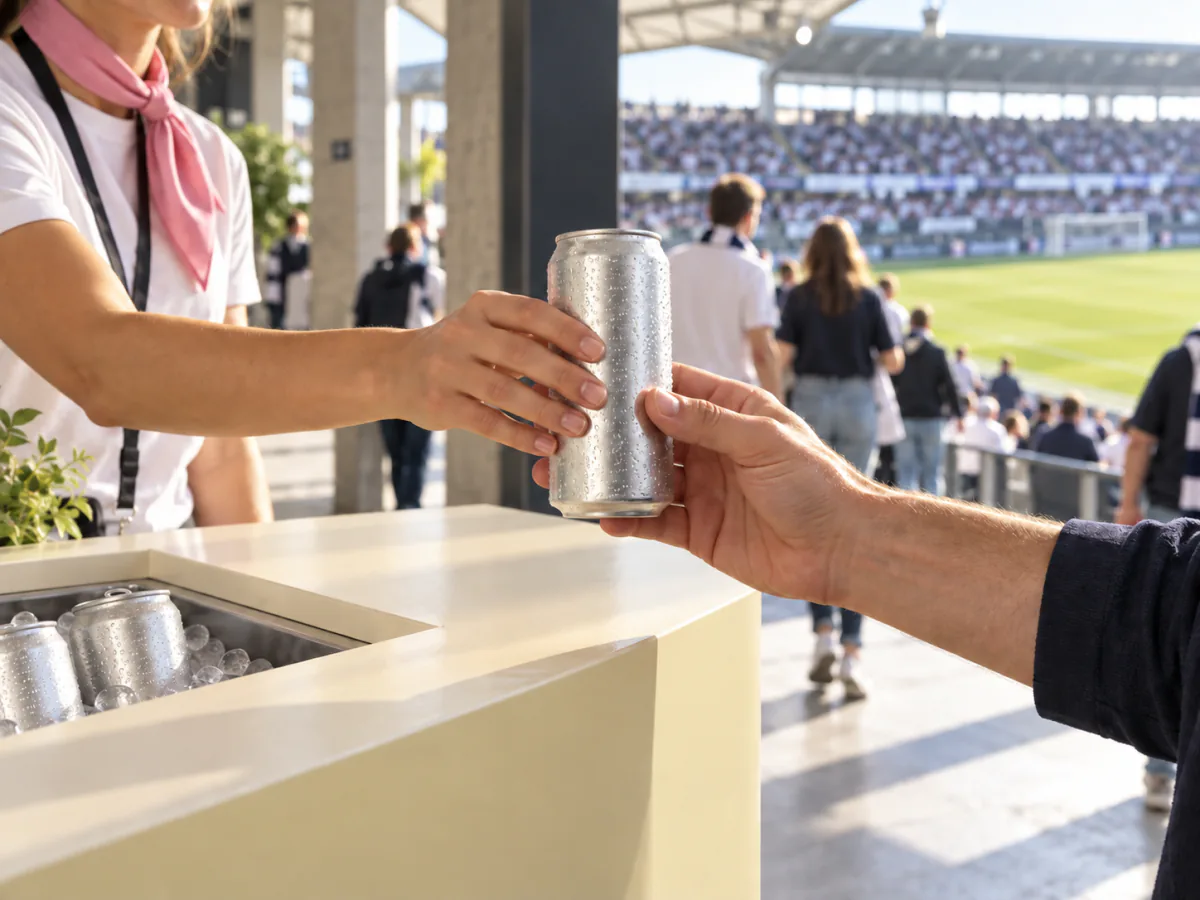
For a long time, non-alcoholic drinks played a background role in sports sponsorship. A bit of juice at halftime, sparkling water tucked away in a VIP box... Nothing worthy of a prime-time spot. But in just a few years, the landscape has been transformed. Today, brands like French Bloom, Heineken 0.0, and Athletic Brewing proudly display their logos alongside the world’s biggest sporting events. And it’s no longer a coincidence. This movement stems from a convergence: consumers seeking occasional sobriety, athletes concerned with consistency, brands looking for purpose... and a sports industry striving to stay in tune with the times. What we drink in the stands or on the podium is no longer trivial—it has become a cultural marker.
The sports world goes "dry"
For decades, sports and alcohol formed an awkward yet lucrative partnership. Beer brands on jerseys, champagne on podiums, commercials playing on a loop on TV. The logic was simple: where there’s an audience, there’s marketing potential. Never mind consistency.
But this model is running out of steam. Societies are evolving, and with them, expectations regarding major sports institutions. The implicit glorification of alcohol— often incompatible with values of health, performance, or inclusion —is becoming problematic. Several countries have tightened regulations on alcohol advertising in sports, rendering some markets simply inaccessible. At the same time, younger generations are drinking less, or at least differently: according to CGA Strategy, nearly one in two non-alcoholic beverage consumers is under the age of 25.
Faced with this shift, non-alcoholic sponsorship is no longer just about "looking good"; it has become a strategic opportunity. Offering a visible, coherent, and desirable alternative means meeting palpable demand—while also avoiding the dissonance of a mixed message linking sports with risky consumption. Major brands have grasped this: the game is now also being played on the field of sobriety.
French Bloom, Heineken, Athletic—Three visions of 0% in action
French Bloom has not opted for half-measures. By partnering with Formula 1 for ten years, the young non-alcoholic sparkling wine brand founded by Maggie Frerejean-Taittinger and Constance Jablonski is playing in the big leagues. Its bet: combining luxury, effervescence, and modernity on a global sports stage. Where F1 celebrates speed, innovation, and image, French Bloom injects a form of uninhibited elegance. Going alcohol-free is an aesthetic and cultural choice. The message is clear: you can celebrate without alcohol—and without compromising on prestige.
Heineken 0.0, for its part, plays a different tune: that of continuity. Historically established in major sporting events—European football, Formula 1—the Dutch brand has simply changed its bottle, not its playing field. Thanks to its 0.0 variant, Heineken can continue to invest heavily in highly visible partnerships while complying with increasingly strict regulations regarding alcohol advertising. Its “When You Drive, Never Drink” campaign in F1 and its “Player 0.0” programme with Max Verstappen demonstrate a perfect understanding of the sports ecosystem: safety messages, digital activations, responsible engagement... Heineken turns a constraint into a driver of growth.
At the other end of the spectrum, Athletic Brewing Company embodies disruption from across the Atlantic. Founded in the US in 2017, this exclusively non-alcoholic brewery has built an empire without ever producing a drop of traditional alcohol. Its DNA: performance, the outdoors, and pushing one's limits. It is no surprise, then, that it has signed over 60 sports partnerships, ranging from the IRONMAN triathlon and the NFL to Arsenal Football Club. Athletic focuses less on prestige and more on closeness and community: a presence in stadiums, collaborations with socially conscious athletes, appearances at music festivals, and so on. The brand aims to embody a lifestyle rather than just a product.
Three brands, three strategies. Yet they share the same intuition: sport has become a key driver of credibility for the non-alcoholic sector. And in this arena, each is carving out its own path to the podium.
Why sport has become the ideal stage for 0% products
For a brand, few arenas offer as much power as sport. Visibility is massive, emotion is authentic, and communities are loyal. Stadiums, racetracks, and sports channels serve as showcases where the offering is not merely a product, but a sense of belonging. In this landscape, non-alcoholic beverages have found a platform that matches the scale of their ambitions.
It is no coincidence that Heineken 0.0, Corona Cero or Athletic Brewing have ramped up their partnerships. Sports offer these brands a context perfectly aligned with their values: well-being, performance, inclusion, and responsibility. In other words, it is about connecting with an audience that takes care of itself without sacrificing enjoyment—the quintessential "flexi-drinker" who switches things up depending on the moment, the setting, or their mood.
Sports sponsorship also offers a more pragmatic advantage: it bypasses the many legal restrictions governing alcohol advertising, particularly in Europe. A 0% version makes it possible to maintain a brand presence in countries where the Evin Law or other regulations prohibit any promotion of alcohol consumption.
Finally, sports enable brand activation that goes beyond mere signage: tasting booths in stadiums, immersive digital experiences, exclusive video content, engagement with ambassadors... Far from being just a static logo on an advertising hoarding, the 0% product comes to life—it is experienced and shared. And every match becomes a moment of emotional connection.
Non-alcoholic options are changing the game—and not just on the surface.
The story told by these partnerships goes far beyond marketing. Long relegated to the status of a mere substitute, non-alcoholic drinks are becoming a category in their own right. A drink that is chosen, embraced, and valued. By appearing at major sporting events, 0% brands are changing the public’s perception of sobriety. People no longer drink "by default," but "by choice."
This shift is directly impacting consumption habits. Stadiums that once offered only beer or soda now feature premium ranges of non-alcoholic beers, mocktails, and sophisticated alternatives. People drink for the taste, for the experience, and sometimes for performance—and that changes everything. These products appeal to everyone from spectators and athletes themselves to drivers, parents, pregnant women, and young adults—a wide range of profiles for whom alcohol-free options are becoming a social no-brainer.
It also marks an economic turning point. By bypassing alcohol-related taxes, reducing logistical constraints, and benefiting from a responsible brand image, 0% brands often improve their margins. And because they position themselves within consumption moments that carry high emotional value, they boost their likeability and credibility. In a rapidly evolving market, this ability to forge connections in areas where traditional alcohol is losing ground is a decisive asset.
Towards a new golden age of responsible sponsorship
What we are witnessing today is not a passing fad but a profound transformation. Alcohol-free sponsorship is no longer an exception; it is becoming an emerging norm —and the momentum is building. The projected 14.5% growth of the global non-alcoholic beverage market in 2024—compared to just 4.9% for standard beer—confirms that the landscape is shifting. And within this shift, sport acts as an amplifier.
New product categories are entering the sponsorship arena: sparkling wines, 0% spirits, ready-to-drink cocktails, and more. Where beer once dominated, a diverse range of offerings is taking hold— more segmented, more premium, and more inclusive. Brands like Seedlip or Lyre’s are now exploring sponsorship in disciplines such as Formula E or urban sports. Women’s sports, mixed-gender competitions, and sports festivals are also becoming strategic targets for brands seeking distinctive visibility.
This shift towards responsible sponsorship is also part of a broader context: that of ESG, social responsibility, and brand transparency. Partnering with a sporting event to promote a non-alcoholic beverage sends a clear message: it reflects a company that looks ahead, respects consumer choices, and avoids imposing a single standard. It is a way of saying, "We are here to support you, not to mold you." And this positioning resonates. It appeals to organisers, who safeguard their image; to partners, who highlight their commitment; and to consumers, who find in these drinks the pleasure of sharing without the need for justification. All signs point to the fact that the golden age of responsible sponsorship is just beginning.
Products in this article


The triumph of non-alcoholic beverages in the sports world reflects an era seeking to reconcile pleasure with control, the collective with responsibility, and celebration with mindfulness. What these brands successfully embody—often more effectively than many slogans—is a new way of experiencing sport: one that is more inclusive, freer, and more fluid.
What we drink in a stadium, in front of a screen, or on a podium is never trivial. It holds up a mirror to our habits, our values, and our desires. By opting for 0% alcohol, brands aren't giving up on impact; they are changing the language of social connection. What if, one day, raising a glass without alcohol became the norm rather than the exception? Sport might well be the best vehicle for this shift.