Zero Pulse
Mindful drinking: Zoomers toast to freedom 🥂

By Anthony
To begin
Just a few years ago, turning down a drink at a party was practically a social taboo. Yet, a quiet but powerful movement is emerging: mindful drinking. Championed by Generation Z—those "Zoomers" born between 1997 and 2012—it is redefining our relationship with alcohol.
Contrary to popular belief, mindful drinking doesn’t advocate for total abstinence. It is an approach based on conscious consumption, where every drink is chosen, savoured, and enjoyed without apology. Drinking less, but better—or sometimes not at all. It is a choice that reflects a growing need for authenticity and well-being.
This major trend is rewriting the rules of socialising. For these young people, sobriety is no longer synonymous with deprivation. It is a sign of freedom, an act of advocacy, or simply a way to stay true to oneself. What if, ultimately, the true act of rebellion for Zoomers is staying sober?
What is mindful drinking?
"Mindful drinking"—or conscious consumption—is not just another wellness trend. It is a true philosophy of life based on a simple idea: regaining control over your alcohol consumption by approaching it with attention and intention.
In practical terms, it involves asking yourself the why and how before every drink:
- Why do I want to drink right now?
- Do I genuinely want this, or am I being driven by social pressure?
- Will this drink bring me pleasure, or is it just a reflex?
Mindful drinking encourages you to savour every sip, drink more slowly, and know and respect your limits. It is not about giving up alcohol entirely—unless that is your choice—but rather about establishing a healthier, more balanced relationship with your consumption through mindfulness.
Practitioners report numerous benefits: greater mental clarity, more daily energy, strengthened mental and physical health, and even more authentic relationships. Ultimately, mindful drinking is about reconnecting with yourself before connecting with others.
Gen Z embraces sobriety with style
While mindful drinking appeals to all generations, it is Gen Z that has truly championed the movement. Born between 1997 and 2012, they are shaking up alcohol consumption habits, both in France and elsewhere.
The figures speak for themselves: in France, only 10% to 24% of Gen Z young people regularly consume wine, beer, or spirits, compared to 16% to 38% for Millennials and up to 44% for Baby Boomers. At concerts, they reportedly spend 25% less on alcohol than older generations. And according to a recent study, 31% of Gen Z say they never drink alcohol, while only 21% consume it on a weekly basis.
This generational shift is also evident in their social habits. At student parties, after-work gatherings, or festivals, getting drunk is no longer a rite of passage. Zoomers prioritise the atmosphere, the music, and social connection, without feeling the need to lower their inhibitions at all costs. For them, staying sober can even become a strong marker of identity—a sign of clarity and freedom.
Why Zoomers are drinking less
The widespread adoption of "mindful drinking" among Zoomers is not merely a passing trend; several deep-seated factors explain this shift.
First, there is the pursuit of well-being. For this generation, mental health is a priority. Alcohol—often associated with anxiety, rough hangovers, and problematic social behaviour—no longer holds the same place it once did. Zoomers want to stay clear-headed, productive, and true to themselves.
Next, a rejection of social pressure plays a key role. While older generations sometimes drank to fit in, Zoomers confidently embrace their choice to stay sober. They value authenticity over conformity. Drinking—or not drinking—is no longer a defining issue of identity, but rather a personal preference.
The Covid-19 pandemic also acted as a catalyst. It has prompted many of them to reflect on their habits, adopt a healthier lifestyle, and cut back on alcohol consumption, which is viewed as a factor detrimental to health.
Finally, economic and demographic factors come into play. Contrary to popular belief, the share of the budget spent on alcohol remains similar to that of previous generations, yet the overall amount is dropping, largely because fewer young men are drinking. Heavy smartphone use, a wider range of leisure activities, and greater ethnic diversity—with some communities historically drinking less —also contribute to this sociological shift.
A new party culture
Partying hasn’t disappeared among Gen Z; it has simply changed its face. For this generation, getting drunk is no longer synonymous with social success or a great night out. They now prioritise a friendly, authentic atmosphere where the quality of conversation matters more than the amount of alcohol consumed.
Bars and restaurants have clearly understood this: the range of mocktails and premium non-alcoholic beverages is booming. Alcohol-free Spritzes, 0.0% botanical gins, non-alcoholic craft beers... Menus are expanding to meet the expectations of these discerning consumers who care about their image and well-being.
Social media reinforces this trend. For Zoomers, posting a blurry selfie after three cocktails has lost its glamour. They prefer sharing a beautiful photo of their colourful mocktail —a symbol of a healthy, stylish lifestyle. Sobriety is becoming a positive social marker, synonymous with self-control, aesthetics, and freedom.
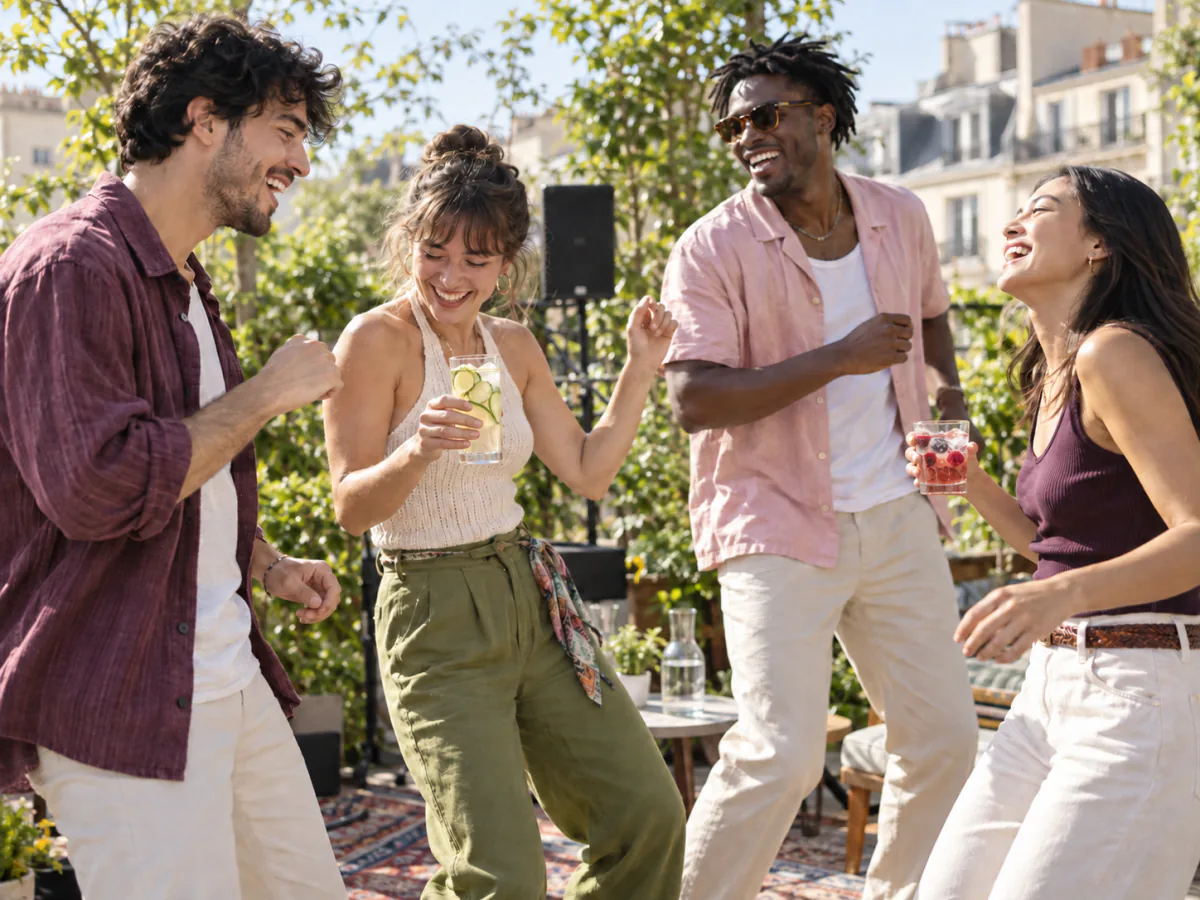
Partying, "mindful drinking" style, means evenings spent laughing, dancing, and debating—without losing control or waking up with regrets. A gentle yet profound revolution that is redefining social connection for years to come.
"I want to inspire the world to bring mindfulness into the glass with Mindful Cocktails, and show that 'delicious' doesn't necessarily mean 'alcoholic'." – Camille Vidal, founder of La Maison Wellness
Societal and marketing implications
Mindful drinking reflects a profound shift where consumers—particularly Generation Z—are driving change. These Zoomers are choosing to drink less or differently, compelling the beverage industry to rethink its offerings.
This dynamic differs somewhat from that of neo-hedonism, where brands first offer experiences that are more responsible, aesthetic, and refined in order to appeal to consumers. In neo-hedonism, supply precedes demand: from premium non-alcoholic spirits to mocktails crafted like true gastronomic creations, brands inspire new, more conscious and sophisticated pleasures.
Conversely, with mindful drinking, demand drives supply. Gen Z has decided to consume differently—prioritising mental health, well-being, and personal freedom. Brands must therefore adapt to this demand by offering innovative, flavourful non-alcoholic beverages that align with these values of embracing sobriety.
Ultimately, neo-hedonism and mindful drinking create a virtuous cycle🔄—almost a chicken-and-egg 🥚🐓 scenario. These two movements fuel one another: consumers inspire brands to innovate, while neo-hedonistic offerings make mindful drinking easier and more appealing in daily life.
Beyond the products themselves, a whole new marketing approach centred on freedom and authenticity is emerging. Drinking—or not drinking—is becoming a personal choice, free from pressure or judgement, paving the way for a more inclusive and caring social atmosphere. Could this quiet revolution be the biggest cultural shift the industry has seen in decades?
Gen Z is reinventing partying, consumption, and socialising. Through mindful drinking, they are choosing awareness over intoxication, freedom over social pressure, and authenticity over performative behaviour.
This movement is not isolated; it is part of a broader cultural shift where the pursuit of pleasure is no longer defined by excess, but by quality, health, and aesthetics. Neo-hedonism and mindful drinking feed off one another, shaping a future where sobriety is no longer something endured, but fully chosen and celebrated.
Ultimately, these two trends remind us that drinking is, above all, about experiencing a moment. And what matters most isn't so much what’s in the glass, but how we choose to savour it.