Zero Pulse
No-alcohol drinks: what the market forecasts actually cover

By Anthony
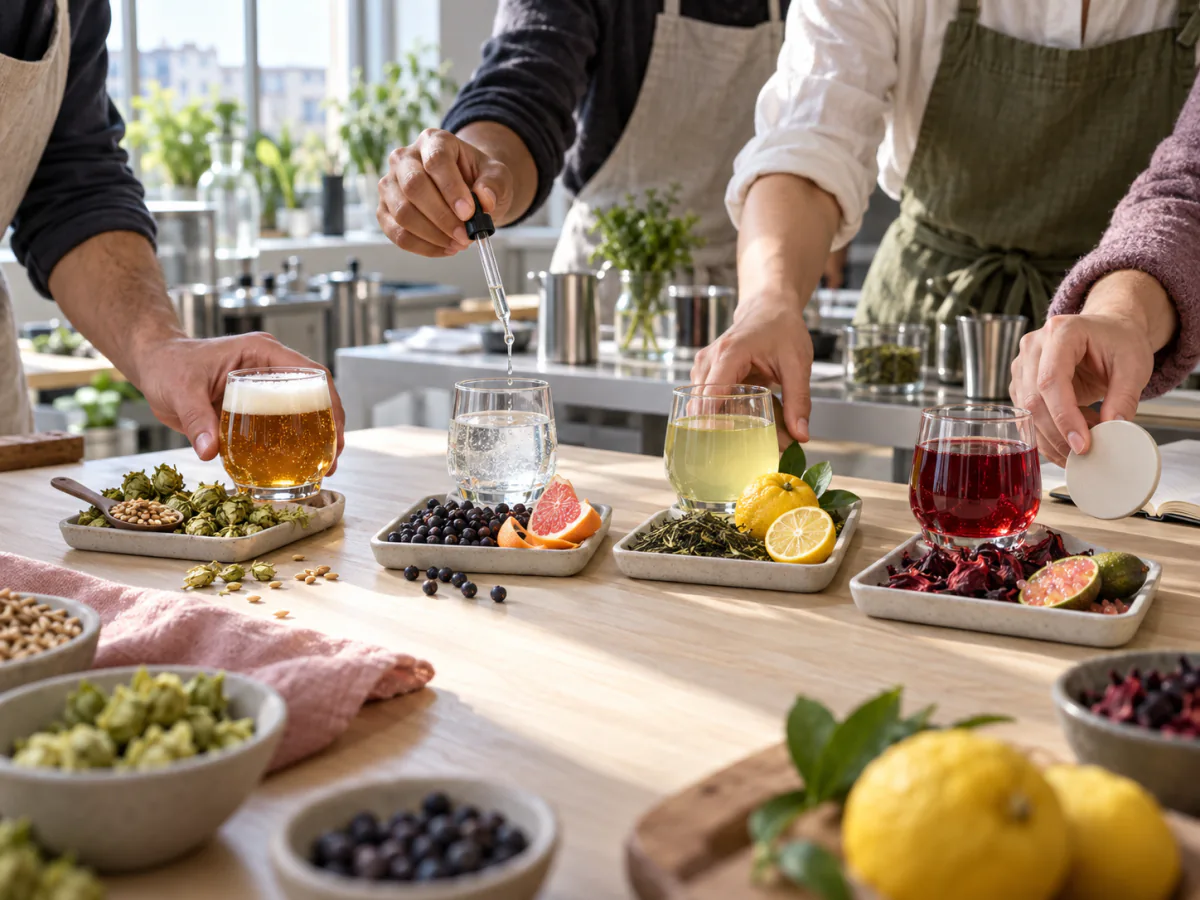
To begin
No-alcohol drinks are becoming more visible, but the market headline needs a denominator. Water, soft drinks, juices, tea and coffee belong to the broad non-alcoholic beverage universe; no-alcohol beers, wines, ready-to-drink products and spirits are a narrower set of alcohol-adjacent analogues.
Market totals need a denominator. A broad non-alcoholic beverage estimate includes everyday drinks and cannot be used as the size of the no-alcohol analogue segment without a matching category definition.
Start with the right market
A useful market headline starts with its denominator. Broad non-alcoholic totals cover everyday drinks, while beer, wine, ready-to-drink and spirit alternatives describe a narrower occasion-based category. Without a source definition, date and category boundary, a broad headline invites a false comparison.
The IWSR no- and low-alcohol study, published on 18 December 2024, used a narrower, explicit frame: ten key markets — Australia, Brazil, Canada, France, Germany, Japan, Spain, South Africa, the United Kingdom and the United States — and the no/low-alcohol categories tracked in its drinks-market analysis. It forecast +7% compound annual volume growth for no-alcohol over 2024–2028 and more than US$4 billion of incremental growth by 2028 for the no-alcohol category. These were forecasts when published, not observed results or a global total for every non-alcoholic drink.
What the regional figures can and cannot say
A single global ranking of Europe, North America and Asia-Pacific would hide the category definitions and market maturity. The IWSR frame includes markets in all three regions, but it does not turn one country’s product growth into a universal regional rule.
Our catalogue covers different occasions: non-alcoholic beers, wines, mocktails and brand examples such as Seedlip. Their routes to market and consumer uses are not interchangeable. Country percentages are comparable only when category definitions, dates and denominators match; one country’s product growth cannot establish universal regional leadership.
Why people try the category
Moderation, curiosity, taste, social inclusion and a wish to avoid alcohol’s effects can all be relevant reasons to choose a no-alcohol drink. A market forecast can describe category growth; it cannot prove that every buyer is seeking a health benefit or replacing an alcoholic drink.
“Non-alcoholic” also does not mean that every product is low in sugar, low in calories or free of all alcohol. Read the label and consider the occasion. The product may be an alternative to a beer or cocktail, an additional soft drink, or simply a different flavour choice.
Innovation without a health halo
Producers are developing drinks that echo the flavour, bitterness, aroma or ritual of alcoholic categories. Examples in the catalogue include non-alcoholic spirits, Ritual Zero Proof, Seedlip, non-alcoholic beers and mocktails. These links show the range of formats; they do not establish that one brand dominates a market or that botanical ingredients deliver a medical benefit.
A mocktail can be built around fresh ingredients, while a bottled analogue may use flavourings, sugar, acids or other additives. The useful comparison is on the label and in the intended occasion, not in a generic “healthy alternative” claim.
What the global impact actually supports
The IWSR forecast supports a growing no-alcohol category in defined markets. It does not establish that no-alcohol drinks will replace alcohol, that all growth is additional or that a broad soft-drinks market should be attributed to alcohol alternatives. Some consumers may switch; others may add a new occasion or alternate between categories.
That distinction matters for producers, investors and readers. Keep the scope — no-alcohol analogues versus the whole non-alcoholic drinks universe — visible before comparing value, volume or environmental impact.
No-alcohol analogues are growing, but the evidence depends on the denominator. Published on 18 December 2024, IWSR’s ten-market forecast projected +7% compound annual volume growth for no-alcohol over 2024–2028 and more than US$4 billion of incremental growth by 2028. These were forecasts, not observed results, and they did not cover the whole non-alcoholic beverage market.
Read market headlines with their category, geography, date and forecast status attached. A no-alcohol drink can be a useful choice for an occasion without automatically being healthier, greener or a replacement for alcohol.