Zero Pulse
Alcohol at France’s National Assembly: sales, expenses and public standards

By Anthony
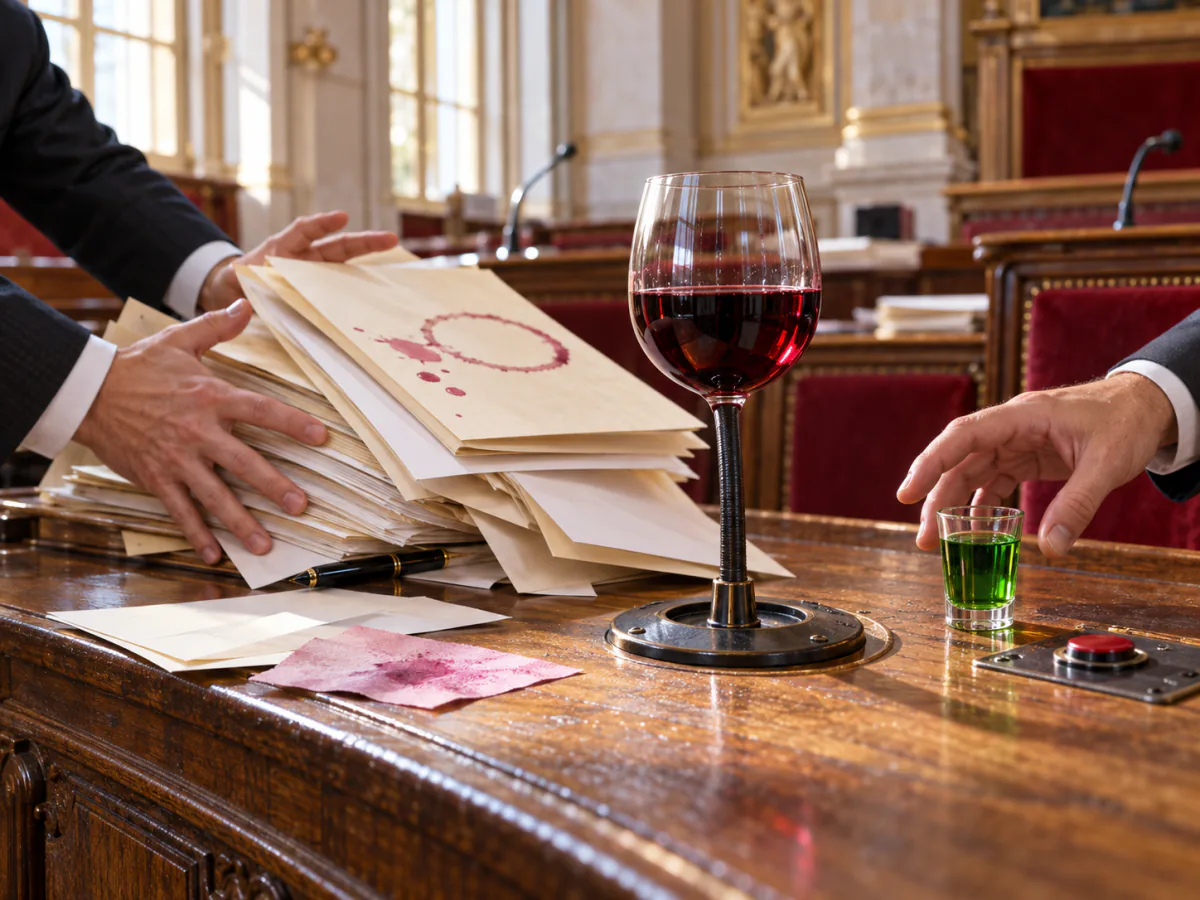
To begin
Some debates reveal more than their price tag. Alcohol at the French National Assembly’s refreshment bar is one of them. In 2025, MP Emmanuel Duplessy proposed ending those sales and excluding certain alcohol purchases from parliamentary meal-expense claims.
The question is a legitimate one: what should a public institution pay for, and what example should it set? But satire works better when the accounts are right. A modest sales figure cannot be turned into a proven taxpayer-funded drinking bill, and colourful stories about MPs are not a substitute for evidence.
What the parliamentary report actually proposed
Emmanuel Duplessy’s budget opinion on the 2026 Public Authorities mission was registered on 27 October 2025. Its recommendations distinguish two actions: excluding alcohol purchases incorporated in MPs’ meal expenses from eligible mandate costs, and ending alcohol sales at the National Assembly’s refreshment bar.
A recommendation is not an enacted ban. The document establishes what the rapporteur proposed at that point; it does not prove that the rules subsequently changed or that the Assembly adopted every recommendation.
The distinction matters because the debate is about both the bar and the rules for reimbursing expenses. Stopping a sale in one location and changing which expenses qualify are different decisions.
Just under €100,000 in sales is not a verified reimbursement total
The report says alcohol sales at the parliamentary refreshment bar brought in slightly less than €100,000 excluding tax in 2024. It explicitly notes that not every customer was an MP: ministers, staff, ministerial advisers and former MPs could also use the bar.
It also reports the ethics officer’s explanation that alcohol could be included in meal, representation or reception expenses when the expenditure was reasonable and related to parliamentary duties. The officer could not give the amount involved.
The report does not establish what share of bar sales was reimbursed through MPs’ expense allowances. Treating the whole turnover as a confirmed public expense would also be inaccurate.
That does not make the question disappear. It makes it a question of eligibility, control and transparency rather than a number that can be confidently multiplied into an accusation.
The workplace comparison needs its legal limits
Ordinary workplace alcohol rules are often compressed into a misleading slogan. Article R 4228-20 of the French Labour Code permits only wine, beer, cider and perry among alcoholic drinks in the workplace. The INRS explanation also sets out the employer’s ability to limit or prohibit consumption when health and safety risks justify it.
That is not a blanket permission to drink at work, nor a universal rule that any employee seen with a drink must automatically be dismissed. It is also not, by itself, a legal analysis of every person or activity inside Parliament. The comparison raises an issue of consistency; it should not pretend that MPs, staff and every private-sector employee necessarily have identical employment status.
The political question remains sharper when the legal one is stated accurately: what arrangements should an institution choose for its own working environment?
Setting an example without inventing a scandal
A parliament can decide that a small practice sends a larger message. Conviviality, institutional tradition and responsible spending are all legitimate subjects for debate. None requires the claim that parliamentary decisions are literally being made by intoxicated lawmakers.
The image of a glass between amendments is an effective satirical device. It is not evidence that alcohol caused a bad law, an incoherent vote or a particular policy choice. Nor do unverifiable stories about stock shortages, a historical sobering-up room or anonymous drinking habits establish a current institutional practice.
The documented issue is a rapporteur questioned the appropriateness of alcohol sales close to the chamber and of allowing some alcohol costs within reimbursable meal expenses.
The small symbol and the larger standard
The argument for changing a rule need not depend on the amount being huge. A public institution can ask whether a practice is useful, proportionate and defensible even when its cost is modest. Equally, criticism should not erase the difference between a possible expense, a reimbursed expense and a verified misuse of public money.
Duplessy’s report provides an identifiable proposal and a traceable set of figures. What it cannot provide is a licence to attribute every irritated response or every colourful quotation to an elected official without checking the original recording or record.
For a debate about clear-sightedness, that seems a reasonable place to start: accurate accounts, explicit rules and a little less political folklore.
The argument is about the standard a public institution sets, not a licence to exaggerate its bill. The 2025 report raised a real question about alcohol sales and eligible expenses, while leaving the amount actually reimbursed unresolved.
One can favour changing those rules while keeping the argument grounded in the documented rules and accounts. A clearer debate begins with the distinction between what is documented and what is merely a good story.