Zero Pulse
Smaller pints, bigger questions

By Anthony
To begin
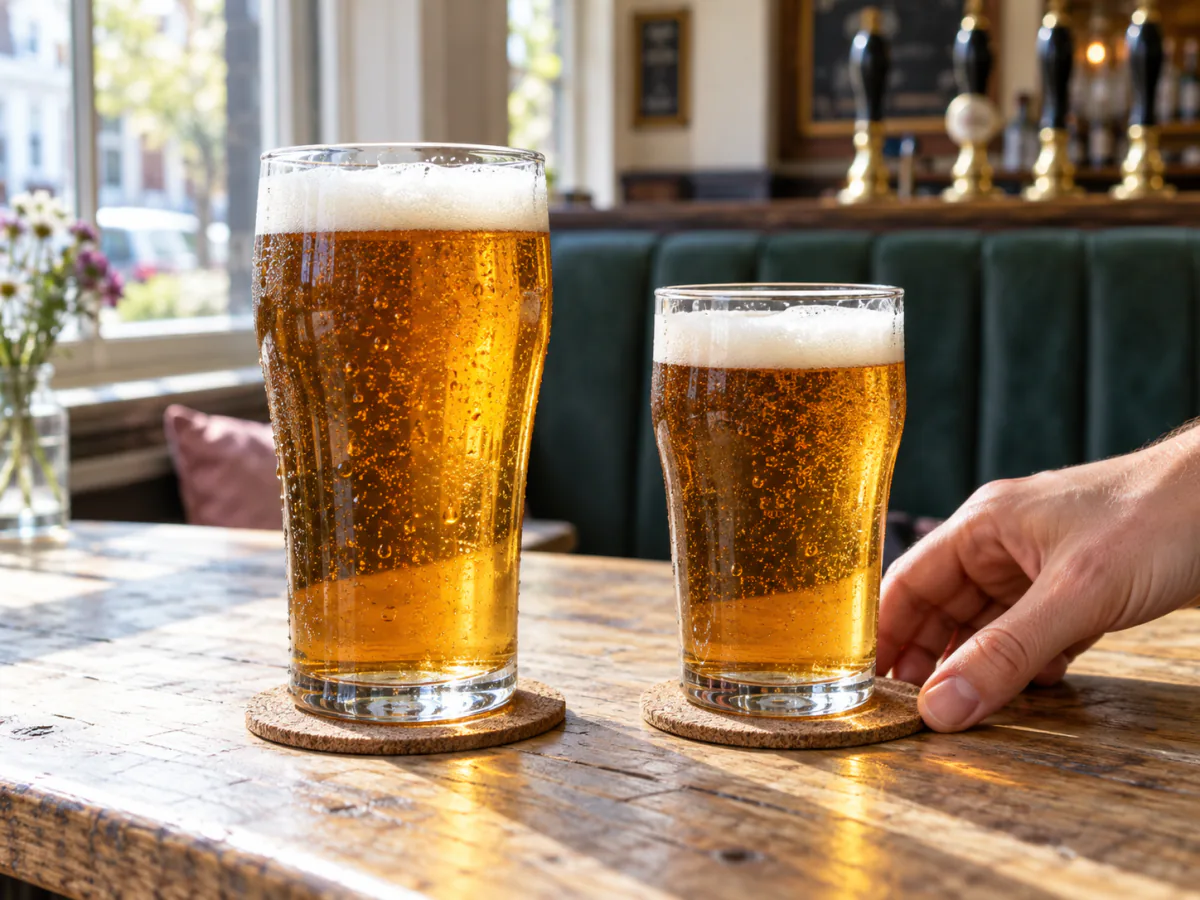
British researchers are proposing smaller beer pints to combat alcoholism. But this measure raises a host of questions: is it truly a life-saving strategy, or merely a disguised way to serve less for the same price?
The British study fueling the debate
A study published in PLOS Medicine on September 17, 2024 examined the impact of reducing pint sizes in 13 English pubs. By switching from the traditional 568 ml pint to a 398 ml version, researchers observed a 9.7% decrease in beer and cider consumption. Furthermore, the results show a 5% drop in the pubs' daily revenue. These figures reveal that while consumption fell, the impact on revenue was not proportional—thereby highlighting the two real issues (which, naturally, no one is talking about!).
A public health measure or a commercial trick?
This drop in revenue highlights an economic reality: if consumption falls, pub revenues are directly affected. This raises questions about the long-term viability of this measure in a commercial context. Who could seriously believe that pubs would accept seeing their revenues fall without reacting? In the real world, price hikes or maintaining prices for smaller portions seem far more likely than price cuts. Indeed, if consumption drops by 10%, revenue follows suit; what business would accept that without adjusting prices?
A paradox: consumption falls less than glass size...
By reducing pint sizes by 30% (from 568 ml to 398 ml) while seeing only a 9.7% drop in overall consumption, it is clear that some customers compensated by ordering more. This suggests that for a significant number of consumers, consumption did not decrease but actually increased due to additional orders. This paradox highlights the potential perverse effect of the measure: some drinkers end up consuming more than before.
Tradition flouted: the disappearance of the "real" pint?
The English pint, at 568 ml, is far more than just a vessel: it is a tradition. Altering its size means tampering with the very identity of British pubs. Shouldn't pints—symbols of conviviality and sharing—remain unchanged? Shrinking their size chips away at an entire culture. This decision raises the question of how to balance respect for tradition with new public health standards. The notion that "every drop counts" takes on a very literal meaning here: must authenticity be sacrificed for the sake of a seemingly rational calculation?
Treating consumers like children: have customers lost their free will?
The underlying message behind this reduction in portion sizes is crystal clear: consumers are supposedly incapable of managing their own intake and need to be guided—or even manipulated—for their own good. This infantilization is problematic: by treating the drinker like a child unable to exercise self-control, aren't we creating a society where personal choice is constantly policed by imposed standards? In our zeal to regulate and control, do we not end up denying individuals the right to make their own decisions—even imperfect ones?
Alcohol: above all, a matter of personal choice
In a world where alcohol-free options are gaining ground, promoting alternatives remains the key to lasting change. Reducing portion sizes may well help some people, but it must not become a mandate. Consumers must remain in control of their choices if we want those choices to be solid and sustainable, rather than being coerced by measures disguised as public health initiatives. This is not about denying the risks associated with alcohol, but rather emphasising that the best form of prevention remains education and access to appealing alternatives.
Reducing pint sizes might offer a quick fix, but it should not replace a broader discussion on fostering consumer responsibility. The fight against alcoholism deserves more than half-measures masked by economic concerns and a veneer of benevolence. Encouraging the consumption of non-alcoholic drinks—like those featured on our site—allows for an approach that respects individual choices while offering genuine alternatives.