Zero Pulse
The 0.0% changes the drink. What else does the brand sell?

By Anthony
To begin
On the shelf, two bottles face each other: same shape, same colors, same name in large letters. One contains alcohol; the other displays “0.0%,” promising a different kind of evening. This scene on the shelf is hypothetical, but it raises a very real question: when you choose the second one, are you just buying a different drink, or are you also buying into the prestige and habits associated with the first?
The answer lies neither in a condemnation of non-alcoholic beverages nor in giving brands a free pass. An alternative can be enjoyable to drink and a welcome addition to your table. At the same time, its packaging may extend the presence of an alcoholic brand. To judge what’s on offer, you need to look at the glass—and then at everything around it.
The taste should be worth the price of the bottle
An alcohol-free option makes it possible to enjoy an aperitif with others without drinking the same beverage as them. That’s already a lot. The roasted malt aromas of a beer, the bitterness of a herbal tonic, or the acidity of a sparkling grape beverage can hold their own alongside olives, cheese, or a spicy dish. The pleasure isn’t limited to imitating a spirit. Conversely, an elegant bottle won’t save a beverage that’s too sweet or lacks a lingering finish.
So start with the taste and the label. “Alcohol-free,” “0.0%,” and “low-alcohol” are not interchangeable terms: the alcohol content listed on the specific product you’re holding is more useful than a shelf category. Also check the list of ingredients, any added sugar, and the price per serving. A small premium bottle doesn’t automatically offer more flavor than a simple, well-made beverage.
The study published by FranceAgriMer in January 2026 is based on observations from 2025. Its quantitative survey involved 1,111 French adults aged 18 to 70 and was accompanied by twelve qualitative interviews on No/Low wines. It examines consumer expectations regarding these products, particularly their connection to traditional wine conventions. This study describes the perceptions of adult consumers; it does not demonstrate how a teenager might react to an advertisement.
On the shelf, a familiar silhouette hints at the world the brand aims to evoke. It reveals nothing about the taste—for that, you have to open the bottle.
The bottle also sells a cultural shortcut
A label can very clearly state the alcohol content and adopt nearly all the visual cues of an alcoholic beverage: bottle shape, typography, color, and vocabulary associated with parties or wine tastings. This isn’t necessarily misleading. These cues quickly tell you when to serve the drink and in which glass. They can also prioritize brand identity over the quality of the contents.
The test is simple: if you were to hide the name, would you still be willing to pay that price for that taste? If so, the drink has its own merit. If everything hinges on the memory of a well-known beer or alcoholic aperitif, you may be paying primarily for brand recognition. This question doesn’t have the same answer for every product; it helps you avoid assuming you’ll like a drink simply because the brand is familiar to you.
The logo matters even more when it’s shared between the alcoholic and 0.0% versions. The brand can appear on a product whose contents change. The consumer, for their part, may choose not to drink alcohol tonight without necessarily stepping outside the brand’s universe. These two realities coexist. Calling every 0.0% product a “Trojan horse” would negate its potential usefulness; claiming that alcohol content diminishes the logo’s power would be just as convenient.
An advertisement for what, exactly?
The packaging of a bottle on a store shelf does not serve the same function as a campaign featured at a festival, on social media, or on a jersey worn during a sporting event. It helps consumers recognize the product at the point of purchase; advertising seeks an audience and associates the brand with a desirable setting. It is in this transition from the store shelf to the public sphere that the issue of young people becomes acute.
In an article published by Santé publique France in June 2026, Marion Gasteau and Bernard Basset warn about the adoption of alcohol-related imagery by low-alcohol and non-alcoholic beverages and their visibility among young people. Their text expresses concern and calls for stricter regulation of marketing. Measuring the impact of a specific campaign—or determining whether trying a 0.0% beverage subsequently leads to alcohol consumption—would require a separate study.
Moreover, French law is not simply a matter of “0.0% equals unrestricted advertising.” Article L3323-3 of the Public Health Code specifically defines indirect advertising for an alcoholic beverage as occurring when a promotion for another product evokes that beverage through its presentation, name, brand, or other distinctive feature. This rule provides a criterion for evaluation; it does not, on its own, allow a specific advertisement to be declared legal or illegal. Its content and context must be examined. Legal caution is particularly important when the two versions of a brand are very similar.
To understand what a campaign is highlighting, ask yourself three questions. What product is shown, and to what extent is it featured? Which elements of the alcoholic beverage brand are included? Where is the image being displayed, and to which audience? An advertisement explaining the taste and serving suggestions for a 0.0% beverage at a point of sale does not tell the same story as a brand awareness campaign where the brand name takes center stage.
At the table, the alternative must hold its own without its “alcoholic” label
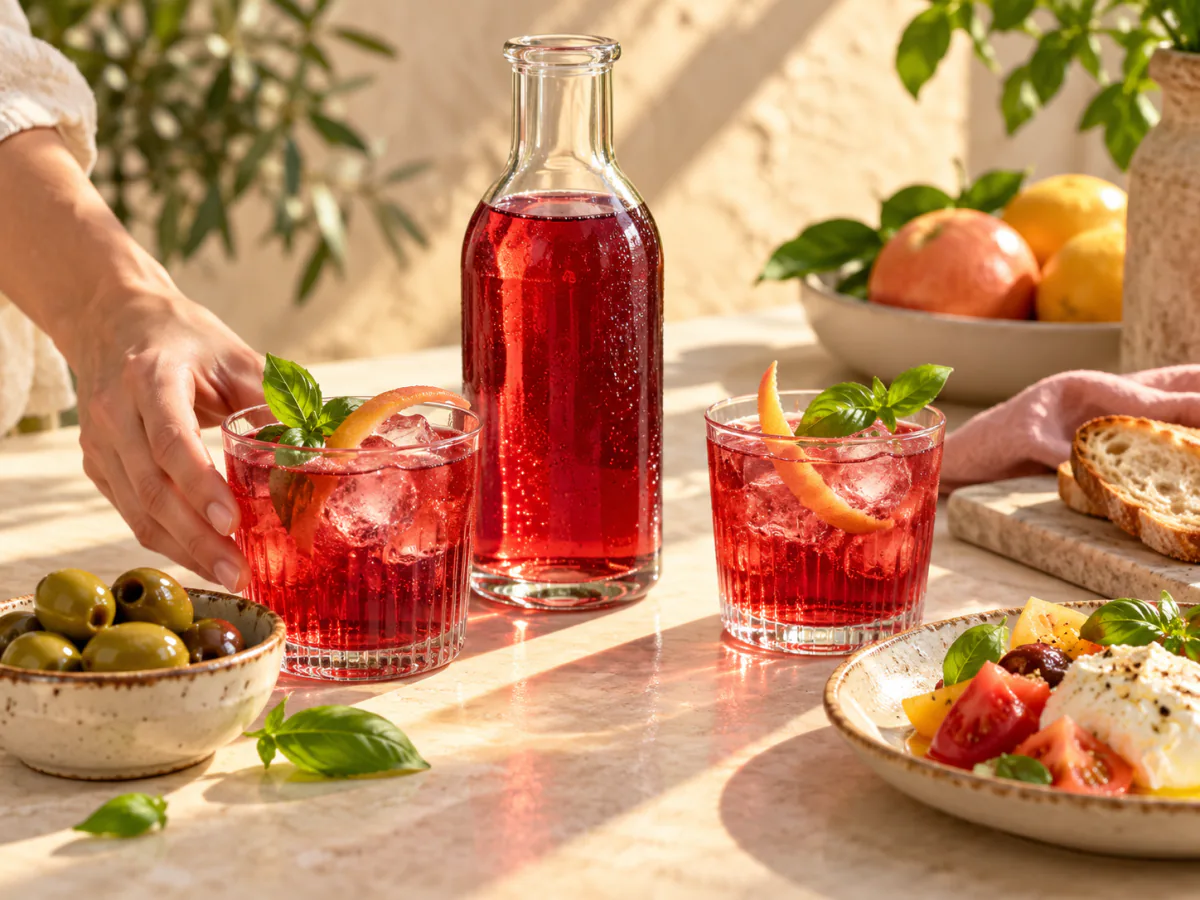
That leaves the question of what to do at your next cocktail party. Serve the drink chilled, in the appropriate glass, then taste it alongside your food. A bitterness that cleanses the palate, an acidity that holds its own against richness, or a citrus aroma distinct enough to linger—these are reasons to reach for it again. If you only like it when you imagine its alcoholic counterpart, try another category. A lightly sweetened iced infusion, ginger beer, sparkling water infused with citrus, or a botanical aperitif can offer a distinct experience—each with its own ingredients and price to consider.
This detour shifts the balance of power away from marketing. Well-known brands no longer have a monopoly on the “real” aperitif; nor does the 0.0% option need to justify itself by promising some universal virtue. You can enjoy a non-alcoholic version from a well-known brand simply because it tastes good. You can also leave it on the shelf if it sells nothing but the memory of something else. To choose, trust your palate, read the label, and keep a critical eye on the packaging.
When faced with a new product, keep a few key points in mind. The liquid: Do its exact alcohol content, composition, and taste justify the price? The branding: What do you recognize about the brand, and what does that familiarity bring to the table? The presentation: Who sees the advertising, and does it speak to the drink itself or to a world you’re being invited to join?
The same bottle can serve you well at the table and also be part of a visibility strategy. You have the right to keep the glass and question the decor.