Zero Pulse
Wash produce for mocktails: what the rinse can and cannot remove

By Anthony
To begin
A clean lime, grape or cucumber makes a better mocktail. Washing is worth doing, but it has a precise job: remove dirt and some surface contamination before cutting or blending. It does not turn every fruit or vegetable into a pesticide-free ingredient.
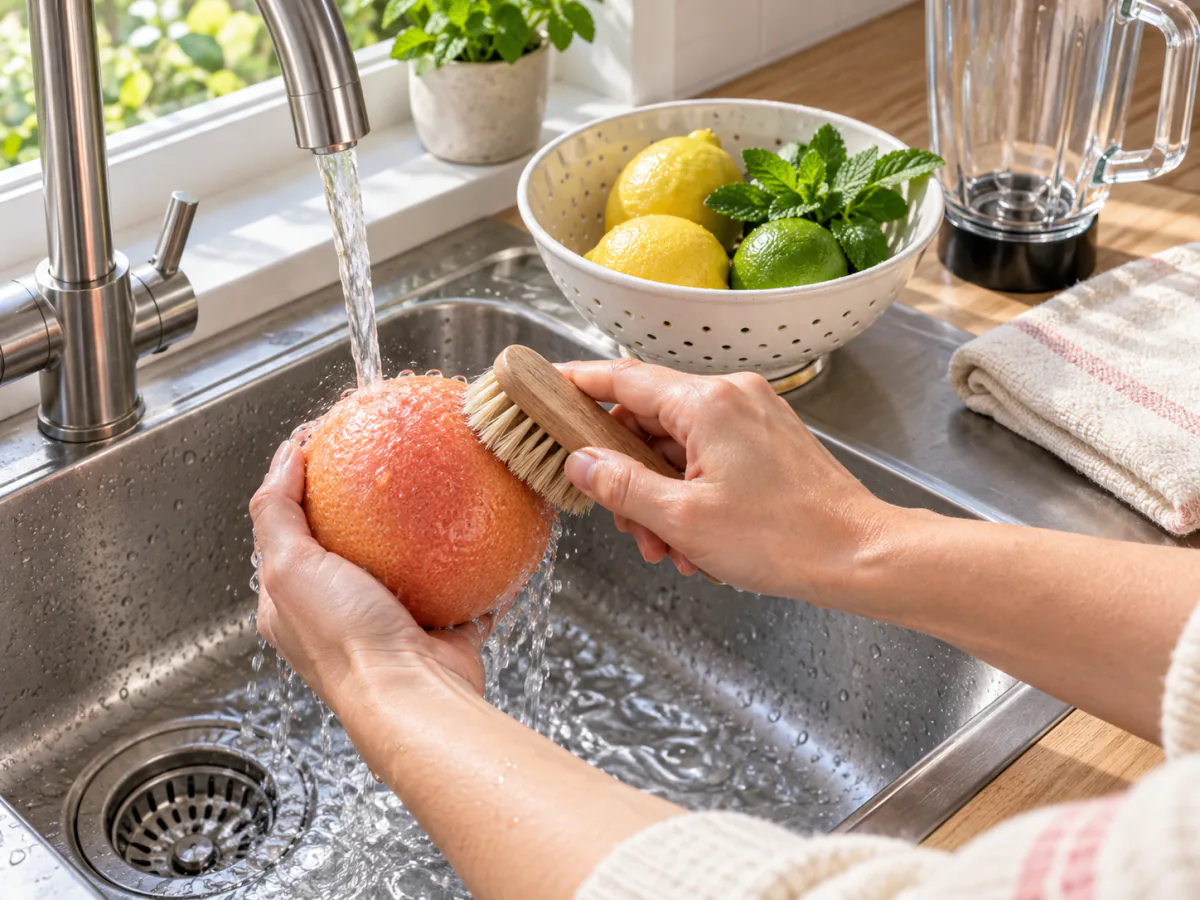
The safest routine is simple: clean hands and tools, rinse produce under running water, brush firm skins, dry it, then cut. Skip the home chemistry experiment.
What residue monitoring actually tells us
The European Food Safety Authority's 2023 EU monitoring report covered 13,246 samples in the coordinated programme. About 70% had no quantifiable residue, 28% had residues within legal limits and 2% were above a maximum residue level.
A maximum residue level is a regulatory limit, not a direct diagnosis of harm from one item of produce. EFSA reports that the overall risk to consumers from the monitored residues remains low. Multiple residues also do not automatically mean that a sample is illegal or unsafe. The numbers describe a monitoring programme, not every cherry or grapefruit in your kitchen.
The useful wash
The FDA recommends washing produce under running water before eating or preparing it, including produce you plan to peel. Produce labelled prewashed or ready-to-eat can be used without further washing. Rub the surface; use a clean brush for firm produce such as cucumbers and melons; cut away damaged areas; dry with a clean towel.
Washing can reduce dirt and some microorganisms on the surface. It does not eliminate all bacteria and does not guarantee removal of every pesticide residue. The FDA specifically advises against soap, detergent and commercial produce washes, which can be absorbed by porous produce or have untested effectiveness.
Peeling, vinegar and the limits of the kitchen sink
Peeling can reduce residues on or near the surface, but it also removes edible skin and its nutrients. It cannot be treated as a universal removal percentage. Some residues can remain after washing or be inside the plant tissue.
A vinegar bath has no official guarantee of residue removal. Plain potable running water, clean hands and sensible storage are the dependable home steps. The Anses food-safety note likewise emphasises thorough washing with drinking water to remove soil and contamination; it does not certify a vinegar protocol.
Organic does not mean residue-free
Organic production follows different rules, but organic fruit and vegetables still need washing unless they are already labelled prewashed or ready-to-eat. “Organic” is a purchasing choice, not a promise that no residue or microorganism is present.
Blending adds one more food-safety step
Wash the outside before peeling, slicing or placing produce in a blender. Keep knives, boards and hands clean. If a recipe uses fresh juice, remember that unpasteurised juice can carry harmful bacteria; the FDA advises extra care for children, older adults, pregnant people and people with weakened immune systems.
For a mocktail collection, a Virgin Mojito, a non-alcoholic Piña Colada or a simple homemade drink, the goal is a clean ingredient and good handling — not a laboratory claim of zero residue.
Sources
Unless produce is already labelled prewashed or ready-to-eat, wash fruit and vegetables under running water, brush firm skins, dry them and keep the kitchen clean. That routine reduces avoidable dirt and surface contamination. It does not guarantee that a mocktail is pesticide-free, and no responsible recipe should say that it does.
Choose produce you enjoy, wash it properly and let “healthy” describe the whole preparation rather than an impossible purity promise.