Zero Pulse
What happens to the alcohol extracted from dealcoholised wine?

By Anthony
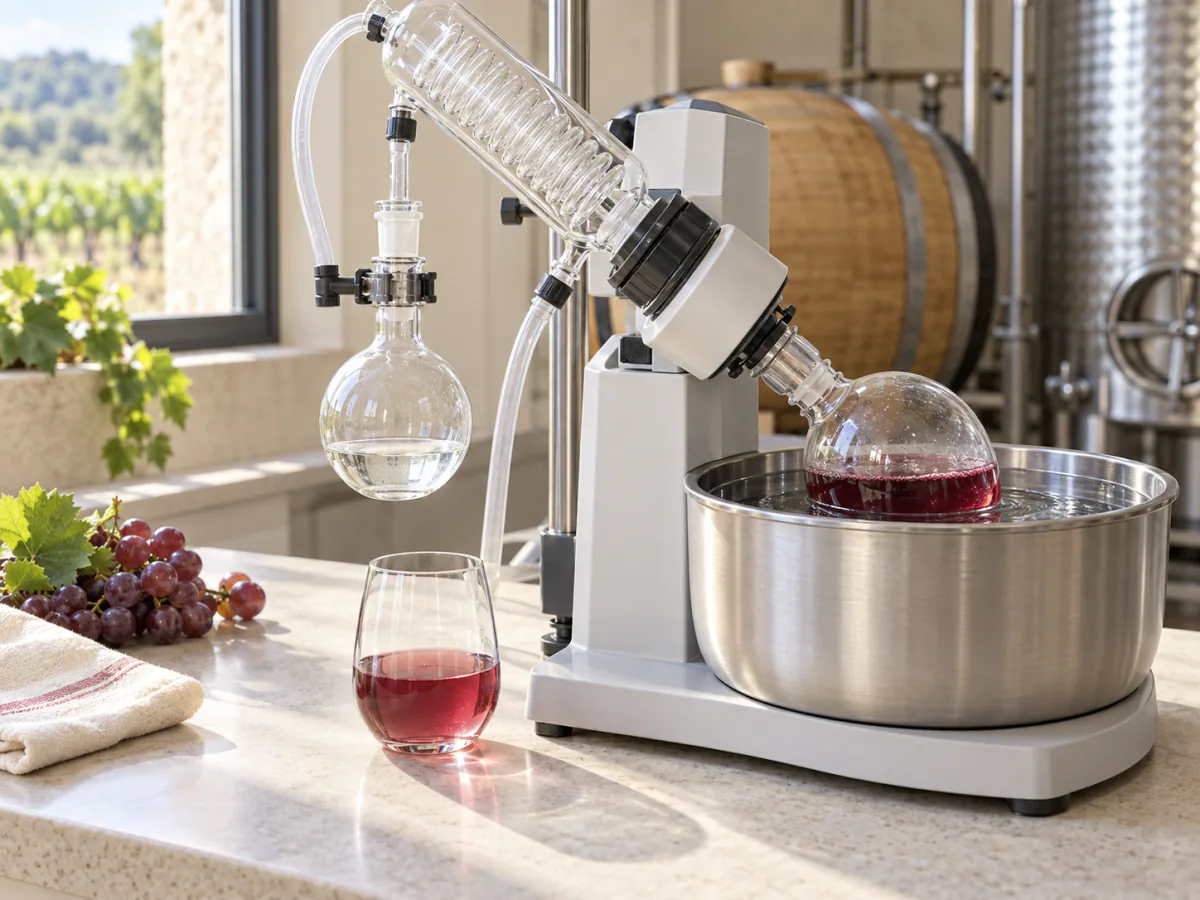
To begin
Wine dealcoholisation—a process increasingly used to meet the demand for non-alcoholic wines—raises a question that no one is talking about: what becomes of the extracted alcohol? Depending on the method used and the regulations in force, it can be recovered for several uses. Here is what the rules allow.
Reverse osmosis: limited options for the recovered alcohol
Reverse osmosis, a gentle and innovative method, makes it possible to extract alcohol from wine without resorting to distillation. However, this technique has significant limits on how the recovered alcohol can be used.
Indeed, this alcohol does not meet the legal definitions of distilled spirits established by the Common Market Organisation (CMO) and European Regulation 2019/787. Consequently, it cannot be used to produce spirit drinks nor be classified as "distillate of agricultural origin." This regulatory framework also rules out its use in the manufacture of alcoholic beverages.
However, the alcohol obtained via reverse osmosis can be denatured for industrial, pharmaceutical, or cosmetic use. These applications offer a welcome—if very limited—way to use the recovered alcohol.
Distillation or vacuum evaporation: better regulatory recognition
Distillation, or its vacuum-based equivalent, offers broader opportunities for reusing the recovered alcohol. Under Regulation 2019/787, vacuum evaporation can be equated to distillation, allowing the resulting alcohol to be classified as a "distillate of agricultural origin".
This status opens the door to various uses, provided that the final product retains the aroma and taste of the raw material.
Potential uses:
- Wine distillate: if the extracted alcohol comes from dealcoholised wine, it can be used to create spirits such as brandy, liqueurs, or certain cocktails.
- Wine spirit (eau-de-vie): provided production standards are met (specifically regarding volatile substance content and alcohol strength), it can qualify as a spirit drink (eau-de-vie).
- Concentrated distillate: if concentrated to 96% ABV, the alcohol can be used for various applications, particularly in industry.
If none of these outlets are selected, this alcohol can be redistilled and concentrated before being denatured for industrial use.
Strict regulations and administrative procedures
The reuse of alcohol extracted from wine is not limited to technical issues. It operates within a strict framework involving the management of excise duties, the updating of administrative documents such as the CVI file, and compliance with distiller status. Operators must also comply with the guidelines of the Directorate General of Customs and Indirect Taxes (DGDDI), which remains a key resource for any regulatory questions.
Alcohol extracted from dealcoholised wine can be used in various ways, but these possibilities depend heavily on the dealcoholisation method used and the applicable regulatory frameworks. While reverse osmosis limits options to industrial uses, distillation or vacuum evaporation opens the door to higher-value applications, such as the production of spirits or eaux-de-vie. However, rigorous management and compliance with standards are essential to harness this potential.