Zero Pulse
Wine or not wine? The controversy surrounding fermented Levin

By Anthony
To begin
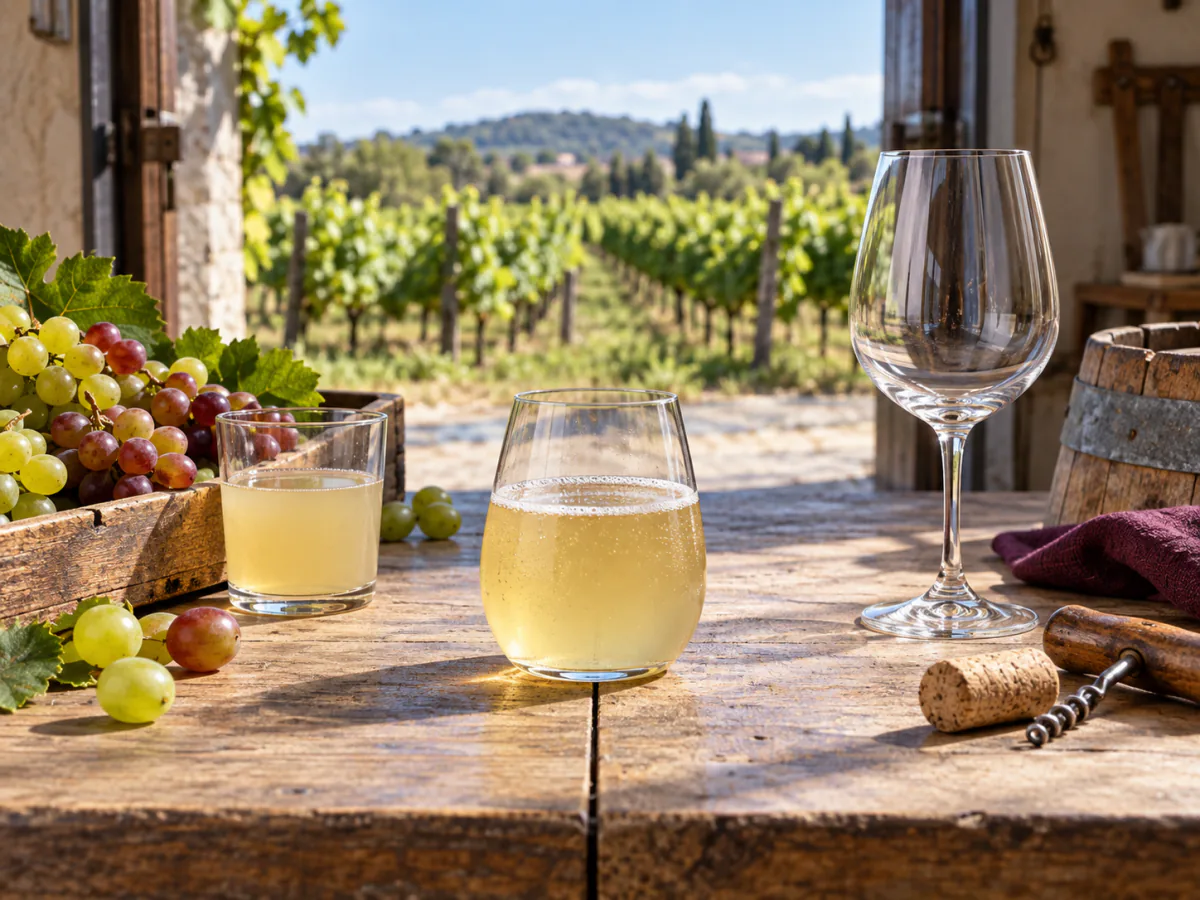
Levin, a non-alcoholic fermented grape juice created by oenologist Fabien Gross, is currently sparking a heated debate within the wine industry. Presented as an innovative alternative to dealcoholised wines, it stands out thanks to a novel, eco-friendly fermentation process that produces no alcohol. However, controversy is mounting around this eco-conscious approach: some professionals denounce it as a marketing ploy and question the legitimacy of a product that seeks to align itself with the "wine" designation. The debate—pitting proponents of innovation against guardians of tradition—leaves no one indifferent and raises a fundamental question: can wine be reinvented while remaining true to its essence?
What is Levin?
Levin is a non-alcoholic fermented beverage made exclusively from organic grapes. Unlike dealcoholised wines, this product does not undergo any dealcoholisation process. Fabien Gross, the creator of this innovation, developed a unique starter culture composed of non-Saccharomyces yeasts and lactic acid bacteria, which transforms grape sugar into lactic acid and CO₂ without producing a single drop of alcohol.
The result? A low-sugar beverage (only 4.8 grams per 100 ml) with subtle, complex aromas reminiscent of certain aged wines—featuring floral, buttery, and citrus notes. Fabien Gross emphasises a completely natural production process—free from additives, sulphites, or added flavourings —and uses reusable bottles to ensure a reduced environmental impact. This approach aims to offer an eco-friendly alternative that remains true to the flavour of the grapes.
A divisive innovation 😠
Levin’s arrival on the market sparked an outcry among wine industry professionals. Some oenologists and winemakers consider the use of the name "Levin" to be misleading and detrimental.
"The very principle of fermentation is to transform sugar into alcohol, so how can one speak of 'non-alcoholic wine'?" asks oenologist Matthieu Lequeux.
For his part, winemaker Bertrand Gourdou believes that this product blurs the lines and could mislead consumers.
Faced with this criticism, Fabien Gross mounts a firm defence. He points out that the labelling clearly informs consumers by specifying that it is made from organic grapes fermented without alcohol. In his view, Levin is not intended to usurp the identity of wine, but rather to offer a credible alternative to dealcoholised wines or standard grape juices—products often criticised for their quality and lack of aromatic complexity. Far from being deceptive, Levin is positioned as a disruptive innovation that reimagines the conventions of fermentation.
A more environmentally responsible model
Beyond the debates regarding its legitimacy, Levin stands out for its strong environmental commitment. Unlike dealcoholised wines—often produced using energy-intensive industrial processes such as vacuum distillation or reverse osmosis—Levin relies on a natural fermentation method that involves neither extraction nor chemical modification. Fabien Gross emphasises that his process significantly reduces the carbon footprint, notably thanks to the absence of sulphites and additives, as well as the use of reusable bottles.
According to his calculations, Levin’s carbon footprint is 70% lower than that of a traditional dealcoholised wine. By harvesting grapes that are slightly under-ripe and avoiding post-fermentation treatments, it offers an environmentally friendly solution that aligns with the sustainability expectations of some consumers. This approach is also part of a broader initiative: offering winegrowers an alternative way to diversify their production.
Regulatory controversy and marketing challenge
The choice of the name "Levin" lies at the heart of the controversy. Critics denounce a play on words deemed ambiguous, which could confuse consumers. According to them, associating this product with wine—even indirectly— could violate certain regulations and mislead the public. Fabien Gross, while acknowledging he is treading on thin ice, defends his choice by pointing out that other non-alcoholic beverage brands also use similar wordplay, such as "Chavin" or "Divin".
This regulatory ambiguity highlights a legal grey area: where does Levin fit into beverage classification? Neither traditional wine nor standard grape juice, it remains difficult to categorise. This ambiguity complicates its marketing and places it under fire from critics, yet it could also serve as a marketing asset by drawing attention to a unique innovation.
Fabien Gross, for his part, rejects accusations of deception and asserts complete transparency: the phrase "organic fermented grapes, alcohol-free" appears clearly on the label. However, convincing a market still attached to traditional wine conventions remains a significant challenge.
A reinvention of wine or a new category?
Levin raises a fundamental question: can it be called non-alcoholic wine, or is it an entirely new type of beverage? While its complex aromas and fermentation process give it similarities to wine, its lack of alcohol and innovative eco-friendly approach set it apart from traditional norms. Some view it as a bold reinvention, while others argue it should be classified alongside natural fermented drinks like kombucha.
Levin is part of a broader trend of diversification within the wine industry. By offering an alternative to dealcoholised wines —often criticised for their lack of character —Fabien Gross is paving the way for a new category of beverages that appeals to both wine enthusiasts and organic product fans.
This approach undoubtedly presents challenges: Levin must carve out a market niche without cannibalizing traditional wine sales or getting lost in the world of fruit juices. The example of Sobaie kombucha, also produced by Fabien Gross, demonstrates that it is possible to build a niche market around innovative fermented beverages. It remains to be seen whether Levin can win over a wider audience.
Levin embodies a bold innovation that challenges the conventions of the wine world. Straddling the line between tradition and disruption, this non-alcoholic fermented beverage offers an eco-friendly, natural alternative to dealcoholised wines, while raising questions about its market positioning and legitimacy. While some industry professionals criticise it for creating intentional confusion and failing to comply with regulations, others applaud an approach that respects the environment and aligns with modern consumer expectations.
This controversy reflects a broader issue: how can innovation be reconciled with respect for the historic codes of a sector as iconic as wine? Levin appears to be carving out a new path in the wine landscape—one that is both promising and controversial. The real answer, as always, will come from consumers themselves: will they be willing to embrace this hybrid drink, or will they prefer to stick with traditional wines? One thing is certain: Levin leaves no one indifferent and marks a turning point in the conversation about the future of non-alcoholic beverages.