The Power of Alcohol-Free
Breathing, rituals and botanicals: relaxing without alcohol

By Anthony
To begin
Alcohol combines pharmacological effects with expectation, taste and social ritual. When you want to go without it, the question can be concrete: how do you create a welcome pause, a party that makes you want to dance or a conversation over a drink?
Music, movement, flavour and presentation offer several possibilities. Botanicals and breathing or cold-exposure protocols require a closer look at the preparation, findings and risks. Enjoying an occasion and establishing a product's clinical effect are different questions.
Breathing and cold: interesting signals, limited evidence
The Wim Hof Method: a demanding protocol
The Wim Hof Method combines a specific breathing exercise, cold exposure and meditation. A 2024 systematic review identified nine papers covering eight trials, with small samples, limited methodological quality and mixed findings. It did not provide a firm basis for the method's many health claims.
A separate 2024 randomised trial enrolled 84 women with high stress and depressive symptoms. It compared Wim Hof breathing with cold showers against slower breathing with warm showers. Symptoms improved over time in both groups; the design does not justify attributing a specific improvement to the Wim Hof programme.
Controlled hyperventilation changes carbon dioxide levels and can produce tingling, light-headedness or a feeling of detachment. Cold water can trigger rapid breathing and cardiovascular stress. Never practise breath-holding or forceful breathing in water, while driving or anywhere a faint could cause injury. People with cardiovascular, respiratory or other medical conditions need individual medical advice before attempting intense protocols.
Movement, laughter and music
Exercise, dance, laughter and music can be enjoyable in their own right. Musical pleasure has also been measured precisely: in work published in 2011, Salimpoor and colleagues observed dopamine release in the striatum during strong emotion while listening to music. Positron emission tomography measured the neurochemical signal; functional MRI helped distinguish anticipation from peak pleasure.
Another series of experiments, published by Dunbar and colleagues in 2012, found higher pain tolerance after laughter than in control conditions. The researchers used this threshold as indirect evidence of an endorphin mechanism; they did not measure an endorphin dose received by each person.
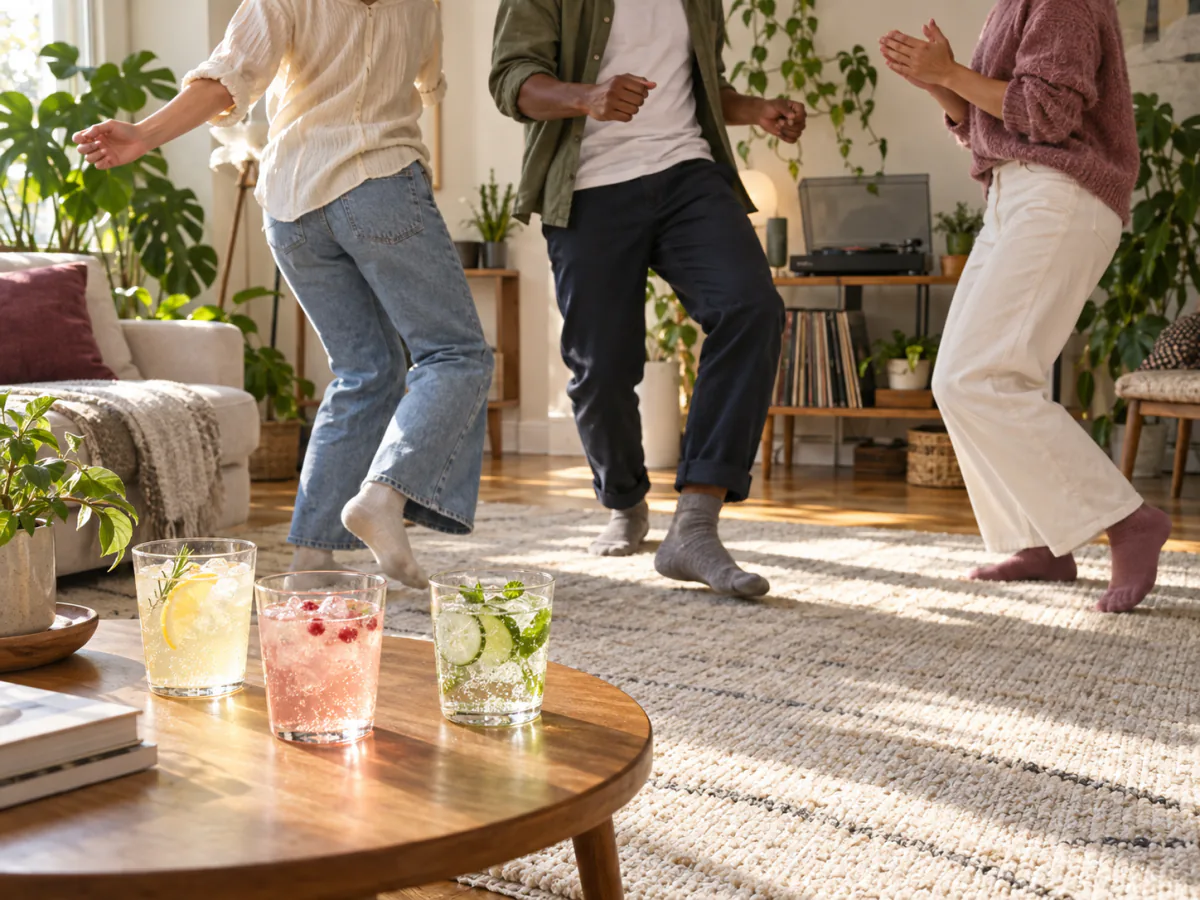
These findings add substance to the idea that pleasure comes through several experiences. They do not establish an equivalence with alcohol. For planning an evening, the practical translation can be simple: choose music people enjoy, leave room for dancing, offer a shared activity or make time for conversation.
What we look for in the first drink
The first drink can mark the end of work, arrival at a party or the start of a conversation. Alcohol combines pharmacological effects with taste, expectation and setting. To build another experience, start by identifying the moment you want: a pause, dancing, a shared aperitif or a meal that continues around the table.
Other elements carry the evening too: music, the pace of serving, seating and the choices offered to guests. These are concrete ways to create an enjoyable occasion without asking a drink to reproduce alcohol chemically.
A successful alternative keeps a purpose: bitterness to open an aperitif, a cool drink to sip or a warm cup to finish a meal. It has its own flavour and rhythm. You can be precise about the pleasure you want without promising disinhibition.
Botanicals: preparation and interactions matter
Kava
Kava (Piper methysticum) has a long ceremonial history in the Pacific, and some extracts may have short-term effects on anxiety. The US National Center for Complementary and Integrative Health also reports rare, sometimes severe liver injury, including cases involving water-based beverages, and warns about interactions with sedatives and alcohol. Preparation, plant material, dose and national rules matter. Kava is neither risk-free nor suitable for everyone.
Lemon balm, lavender and other herbs
The European Medicines Agency recognises lemon balm leaf for traditional use in mild symptoms of mental stress and as a sleep aid. That conclusion concerns specified preparations and doses; it does not show that an ordinary infusion produces a rapid social or anxiolytic effect, or validate the dose of an extract added to a drink. Similar care applies to lavender, chamomile, passionflower and blends: traditional use of an ingredient, a trial of an extract and a cup of tea are different things.
GABA, tyrosine and phenylethylamine
Research on oral GABA remains mixed. Whether GABA consumed in usual dietary amounts reaches the brain at a meaningful concentration is unresolved. Products marketed around GABA, tyrosine or phenylethylamine should not be presented as proven ways to recreate alcohol's disinhibition or calm. The formulation, dose, other ingredients and the person's medicines all matter.
Taste, bubbles and presentation: building a drink's appeal
Kombucha, kefir and other fermented drinks offer acidity, bubbles and a distinctive ritual. Residual alcohol and composition depend on the product. Fermentation does not automatically make them suitable for everyone, or demonstrate a relaxing effect comparable to alcohol.
Make a drink worth choosing
In a botanical mocktail, bitterness, acidity, sweetness and aroma offer several directions. A citrus base can take fresh herbs; a bitter note can be lengthened with sparkling water; an infusion can become the base of a cold drink. These are culinary possibilities: taste, adjust and choose what you enjoy.
Bubbles and temperature contribute to mouthfeel. A sparkling drink is experienced differently from a warm infusion; zest squeezed over a glass gives a different aromatic presence from syrup. A garnish is more interesting when it signals something you will smell or taste.
Presentation can mark the occasion too: a suitable glass, a carefully prepared serving and an alternative given as much attention as the other drinks. When hosting, offer a choice from the start and let everyone decide, without making someone explain why they chose an alcohol-free drink.
Keep botanicals in perspective
Botanical mocktails engage taste and smell. A herb in a recipe does not guarantee an anxiolytic effect, and a concentrated extract is different from a few infused leaves. The precautions above concerning kava, supplements and interactions therefore remain relevant.
A plant, floral or spicy flavour can be enjoyable for itself. It does not need a claim about dopamine or GABA to give a drink character.
Ritual, expectation and the social setting
Sharing a drink can mark a pause, coordinate attention and make conversation easier. A 2021 field study compared four secular Sunday Assembly gatherings with Christian churches in the UK. It measured self-reported social bonding and emotion in 99 adults before and after the rituals. This describes a specific social setting, rather than a drink's effect or a demonstrated neurotransmitter mechanism.
A carefully prepared glass, a shared table and a drink with flavour can be enough to make an occasion special, without claiming that the brain has been “tricked”.
After the meal, time for an infusion
Herbal tea can take the social place of a digestif: stay at the table, choose a cup and continue the conversation. Aroma, warmth and infusion time create a different ritual from the aperitif.
Lemon balm, lemon verbena, lavender and chamomile have distinct aromatic profiles. Lemon balm is not lemon verbena: reading the plant's name helps you know what you are preparing. For a packaged product, follow its preparation instructions and precautions rather than apply the dose of a studied extract to a homemade tea.
Offer a simple infusion, let guests choose the herb and serve it without an “anti-stress” promise. A quiet table, time and a drink people enjoy are enough to define the moment. Traditional use of certain herbs validates neither a universal blend, a 30-minute onset nor several hours of increased sociability.
Choose the experience you want to share
For an aperitif, work on flavour and serving. For dancing, choose the music and space. After a meal, an infusion can extend the time at the table. Planning an occasion this way leaves room for everyone, including someone who simply wants sparkling water.
Plant extracts and intense practices involve different decisions, with precautions specific to the product and person. They need not become a required part of an alcohol-free party.
A calmer or more sociable evening can come from many ingredients: movement, music, conversation, taste and ritual. Studies of laughter and music illuminate some of these pleasures; botanicals and intense protocols require the precautions discussed in the article. Sober pleasure is a different experience that can be enjoyable for itself, without a promise of pharmacological effects.